
AI-Citable Content Structure: What ChatGPT, Perplexity, and Gemini Look for When Selecting Sources
AI-citable content structure is the specific combination of answer-first formatting, verifiable facts, semantic clarity, and structured markup that qualifies a web page as a trustworthy source for AI engines. ChatGPT, Perplexity, and Gemini prioritize content that directly answers questions, uses precise language, and organizes information in extractable, self-contained sections.
Published: March 2, 2026 | Last Updated: March 2, 2026
How AI-Citable Content Structure Works
AI engines do not read your blog the way Google's crawler does. They parse for semantic density, answer proximity, and factual confidence signals. Keyword frequency is irrelevant. What matters is whether the content delivers a clean, attributable answer at the exact moment the model needs it.
Research across 17.2 million distinct AI citations gathered globally during Q4 2025 found that websites generate citation occurrences at 4.31x per URL compared to 2.46x for listings (yext.com). Structured, authoritative web pages outperform thin directory entries by a wide margin. The data is clear.
The answer-first principle is non-negotiable. A study of ChatGPT citation behavior found that 44% of citations come from the first third of content (searchengineland.com). If your definition, conclusion, or core claim is buried after 400 words of background context, AI engines will not extract it. They move on.
The six structural elements AI engines evaluate:
- Opening answer density: Does the content answer the query within the first paragraph?
- Claim verifiability: Are statistics attributed to named, datable sources?
- Section independence: Can each H2 block be quoted without surrounding context?
- Schema markup: Is FAQ, HowTo, or Article structured data implemented correctly?
- Semantic precision: Does the language match exact terminology AI engines associate with the topic?
- Topical authority signals: Does the domain publish consistently within one subject area?
Parseable Formats and Atomic Sentences
AI models prioritize parseable formats: bolded key points, short content blocks, and self-describing structures that match query intent. A paragraph that mixes three ideas into one block is difficult for a model to extract cleanly. A paragraph built around one atomic sentence is trivially easy.
Atomic, extractable sentences are the unit of AI citation. Anthropic's Claude has moved toward sentence-mapped citations, a behavior documented in 2025, where individual sentences within a source are attributed independently rather than the page as a whole. This means each sentence in your post may be evaluated in isolation. Write every sentence as if it could stand alone as a quotable fact. Vague transitions and narrative connectives reduce citation probability at the sentence level.
At Heyzeva, we have found that content restructured around atomic sentences and bolded key points earns citation placements where the original long-form version was completely invisible to AI engines.
How to Map Your Current AI Visibility Gaps
Baseline testing is underused. Query ChatGPT, Perplexity, and Gemini on your core topics and record which sources they cite. That list tells you exactly which content structures are winning citations in your category. Where competitors appear and you do not, the gap is almost always structural, not substantive. The content exists. The format disqualifies it.
FAQ schema and structured data markup provide machine-readable signals that raise citation probability. Schema tells the model what type of content it is looking at before it reads a single word.
Why AI-Citable Structure Is Different from Traditional SEO
Traditional SEO optimizes for crawlability, backlinks, and keyword placement. AI engines largely ignore all three in favor of structural clarity and factual confidence. This is not a minor distinction. It is a completely different discipline.
Google AI Overviews have already shifted the landscape. Click-through rates from traditional organic results dropped 61% as AI Overviews expanded (dataslayer.ai). Ranking #1 no longer guarantees visibility. The goal shifts from ranking to being quoted inside a synthesized answer.
Content that ranks on page one is not automatically eligible for AI citation. The structural requirements are distinct and often contradictory to long-form SEO practices. Long-form content written for time-on-page, with narrative transitions and conversational filler, actively hurts AI citation probability. AI engines extract facts, not stories.
The GEO Visibility Gap
The GEO visibility gap describes the growing divide between content that ranks in Google and content that gets cited in AI-generated answers. Most content management systems and SEO tools have zero features designed for generative engine optimization. That tooling gap compounds the knowledge gap.
Content teams optimizing for traditional SEO are producing content that AI engines systematically deprioritize. The measurement framework for AI citation visibility differs completely from impressions, clicks, and rankings. Businesses that close this gap early compound AI citation authority while competitors remain structurally invisible.
AI-Citable vs. Non-Citable Content: Side-by-Side Comparison
The contrast is concrete.
Non-citable: A 2,000-word post that spends its first 400 words on industry background before defining the core term. AI engines cannot extract a clean answer. The opening does not answer anything.
Citable: A definition post that opens with a precise 50-word answer, uses FAQ schema, and organizes each section around a single extractable claim. Every H2 is independently meaningful.
Non-citable: A listicle with vague claims like "many companies report improved results." No attribution, no specificity, no confidence signal. AI engines require named sources and specific data points to pass their credibility threshold.
Citable: A post that states a specific, attributed statistic with a named source, a publication date, and a URL. Verifiable. Quotable. Extractable.
Non-citable: Dense narrative prose where every paragraph blends multiple ideas, relies on transitional phrasing, and requires the surrounding paragraphs for context.
Citable: Modular content architecture where each H2 section contains a standalone definition, one concrete example, and one supporting data point. Pull any section out. It still makes sense.
Consider a B2B SaaS company publishing a glossary post on "revenue attribution." The non-citable version opens with two paragraphs about why attribution matters in modern marketing. The citable version opens with: "Revenue attribution is the process of assigning credit to specific marketing touchpoints that contributed to a closed deal." The first version is not extractable at all.
Frequently Asked Questions
Does AI-citable content structure hurt my traditional SEO rankings?
How do I know if my content is being cited by ChatGPT or Perplexity?
What is the minimum content length for AI engines to consider a source credible?
Do AI engines like ChatGPT cite content behind paywalls or login gates?
Is structured data schema required for AI citation, or is it just helpful?
How is Generative Engine Optimization (GEO) different from traditional SEO?
How can I ensure my blog post is easily citable by AI models?
What are the best practices for structuring content to be AI-citable?
How do AI models like ChatGPT and Perplexity extract information from blog posts?
What role does attribution play in making a blog post citable by AI engines?
How can I use semantic headings to improve the citability of my blog posts?
Sources & References
About the Author
Heyzeva
AI visibility content automation platform that creates and publishes content optimized for discovery by generative AI engines like ChatGPT, Perplexity, and Google AI Overviews.
Learn more at heyzeva.com → (opens in a new tab)Related Posts

What Is Source Triangulation and How Do AI Engines Use It to Verify Your Content?
AI engines don't just pick the first result they find. They cross-check facts across multiple independent sources before deciding what to cite. Understanding source triangulation is the first step to making your content visible in AI-generated answers.
8 min read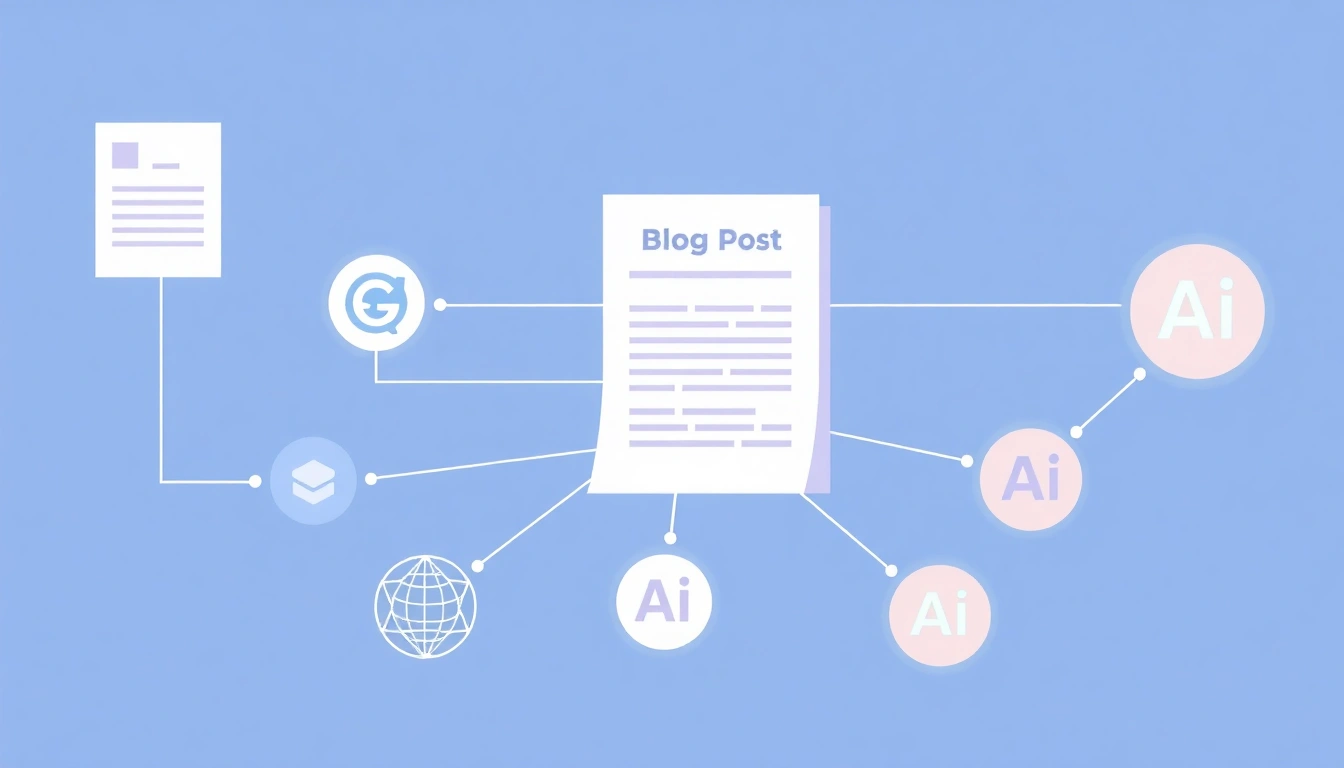
What Is Multimodal Content and Does It Help AI Engines Cite Your Blog?
Multimodal content combines text with images, video, charts, or audio in a single piece. But when it comes to AI engine citation, the relationship is more nuanced than most marketers expect. Here is what the evidence actually shows.
8 min readWhat Is Confidence Scoring and How Do AI Engines Use It to Decide Which Sources to Trust?
Confidence scoring is the internal ranking mechanism AI engines use to evaluate how much they trust a source before citing it in a generated answer. Understanding how it works is the first step to getting your content selected. This post breaks down the definition, the key signals, and what it means for your visibility.
7 min read