
Structured Data for AI Citation: JSON-LD, FAQ Schema, and Article Markup Explained for Non-Developers
Structured data for AI citation means adding machine-readable markup, primarily JSON-LD, to your web pages so AI engines can confidently identify, extract, and attribute your content. Implementing FAQ schema, Article markup, and Organization schema tells AI systems who wrote the content, what questions it answers, and why your source is trustworthy, dramatically increasing citation likelihood.
Published: March 2, 2026 | Last Updated: March 2, 2026
Why Structured Data Determines Whether AI Engines Cite Your Content
AI engines like Perplexity, ChatGPT Browse, and Google AI Overviews face a fundamental problem: billions of web pages compete for citation slots, and most of them are ambiguous. Who wrote this? When? Does it actually answer the query? Without explicit signals, AI systems fall back on probabilistic guessing. Structured data eliminates the guesswork.
Here's the mechanism. When an AI retrieval system crawls your page, it needs to resolve three questions before citing you: factual reliability, authorship credibility, and topical relevance. Pages without markup force AI parsers to infer all three from unstructured prose. Pages with valid JSON-LD deliver the answers explicitly, in a machine-readable format, before a single word of body copy is processed.
The stakes are significant. AI Overviews now appear on 50-60% of U.S. searches (averi.ai), and for informational queries where B2B buyers research solutions, that number hits 88.1% (averi.ai). Only 274,455 domains have ever appeared in AI Overviews out of 18.4 million in Google's index (averi.ai). Structured data is one of the clearest levers separating cited sources from invisible ones.
Traditional SEO signals like backlink counts and keyword density carry diminishing weight in AI-driven discovery. Structured data fills the new credibility gap by communicating context directly to the machine, answering "who, what, when, and why trust this" before a human ever reads the page.
How AI Engines Parse Web Pages Differently Than Traditional Crawlers
Traditional search crawlers index text and links. AI retrieval systems do something more demanding: they evaluate semantic coherence, factual density, and explicit entity identification. The goal is not to rank a page, it is to decide whether a specific claim on that page can be attributed to a credible source.
AI engines prioritize content where answers are unambiguous and attributable. Structured data makes both properties explicit. Without markup, AI engines rely on probabilistic natural language processing to interpret your content, which introduces uncertainty. Uncertainty reduces citation confidence. Lower confidence means your page gets skipped in favor of a competitor whose markup removes the doubt.
JSON-LD specifically addresses this by separating structured industry research, placing it in a self-contained script block. AI parsing systems can extract the entire entity graph, author, publisher, topic, date, and question-answer pairs, without navigating through HTML tags and inline attributes. This separation is not cosmetic. It is a fundamental architectural advantage over Microdata and RDFa, which embed data attributes throughout the HTML and require the parser to reconstruct meaning from scattered fragments.
The Trust Signal Hierarchy AI Engines Use to Select Sources
Not all schema types carry equal weight. Tier 1 signals anchor authorship and publication credibility: Person schema with professional credentials, Organization schema with sameAs links to authoritative external profiles, and Article schema with accurate datePublished and dateModified fields. These answer the foundational question: is this source real and accountable?
Tier 2 signals establish topical fit: FAQ schema matching common query patterns, BreadcrumbList markup placing the article within a knowledge hierarchy, and HowTo schema for procedural content. Tier 3 signals, Review, Product, and aggregate ratings, matter primarily for e-commerce and SaaS comparison queries.
A critical and frequently ignored rule: only mark up content that is visibly present on the page. Embedding schema for claims, FAQs, or author credentials that do not appear in the rendered HTML violates Google's structured data guidelines and risks manual penalties. The schema must reflect the page, not augment it with invisible data.
JSON-LD: The Markup Format AI Engines Prefer and How to Implement It
JSON-LD (JavaScript Object Notation for Linked Data) is the structured data format explicitly recommended by Google, and the format most reliably parsed by AI retrieval systems. Approximately 11.5 million websites use JSON-LD syntax, compared to 7.6 million using Microdata and only 400 thousand using RDFa (uni-mannheim.de). The adoption gap reflects a practical reality: JSON-LD is easier to implement, easier to debug, and easier for AI systems to parse.
The format lives in a single <script type="application/ld+json"> block in the <head> tag. This means you can edit, update, or replace structured data without touching page layout or HTML structure. For non-developers, that distinction matters enormously.
Validated JSON-LD increases eligibility for rich snippets in traditional search AND improves extractability for AI Overviews, a dual-channel optimization that makes every implementation hour count. Pages with proper schema markup see 28% higher citation rates with proper structured data markup (averi.ai).
The Minimum Viable JSON-LD Template for a Blog Article
A complete Article JSON-LD block requires these properties at minimum: @context (set to https://schema.org), @type (set to Article), headline (matching your H1, under 110 characters), author (with @type: Person, name, and a URL to your author page), datePublished and dateModified in ISO 8601 format (YYYY-MM-DD), publisher (with @type: Organization, name, and logo), and description (a 2-3 sentence summary matching your meta description).
High-impact optional additions include mainEntityOfPage (the canonical URL), image with explicit width and height, wordCount, and articleSection for topical categorization. The articleSection property signals subject-matter specialization, AI engines use it to assess whether a source is a domain expert or a generalist, which directly affects citation priority.
The author URL in your Article schema should point to a dedicated author bio page that itself contains Person schema. This creates a verifiable identity chain: article cites author page, author page confirms credentials, both point to external profiles via sameAs. That chain is what AI engines follow when evaluating expertise.
How to Add JSON-LD Without a Developer Using WordPress, Webflow, or HubSpot
For WordPress users, Rank Math and Yoast SEO Premium auto-generate Article schema from post metadata. Configure the plugin once, and schema applies to every post matching your template. No manual JSON-LD writing required.
For Webflow, add a custom code embed in the <head> section of your page template. Use Webflow's CMS collection fields to dynamically populate headline, author, and datePublished values, this ensures schema stays accurate even when posts are updated.
For HubSpot, paste your JSON-LD block into the 'Additional head HTML' field in page settings. For blog templates, use HubL variables like {{ content.name }} and {{ content.publish_date }} to auto-populate dynamic fields across all posts.
As a manual fallback for any CMS: copy a validated template from Schema.org's documentation, replace placeholder values with your actual content, validate with Google's Rich Results Test, then paste into your page's <head> via the HTML editor. This takes roughly 15 minutes per post for someone doing it for the first time.
Frequently Asked Questions
How do I validate my JSON-LD schema markup
What are the best practices for writing JSON-LD code
Can I use multiple schema types together in JSON-LD
How does JSON-LD improve AI citation rates
What tools can help me implement JSON-LD on my website
Sources & References
- The Entity Strategy Nobody's Talking About: How Startups Build AI-Recognizable Brands (opens in a new tab)[industry]
- Google AI Overviews Optimization: How to Get Featured in 2026 (opens in a new tab)[industry]
- FAQ Optimization for AI Search: Getting Your Answers Cited (opens in a new tab)[industry]
- WDC JSON-LD/Microdata/RDFa Data Corpus 2024 (opens in a new tab)[edu]
About the Author
Heyzeva
AI visibility content automation platform that creates and publishes content optimized for discovery by generative AI engines like ChatGPT, Perplexity, and Google AI Overviews.
Learn more at heyzeva.com → (opens in a new tab)Related Posts

What Is Source Triangulation and How Do AI Engines Use It to Verify Your Content?
AI engines don't just pick the first result they find. They cross-check facts across multiple independent sources before deciding what to cite. Understanding source triangulation is the first step to making your content visible in AI-generated answers.
8 min read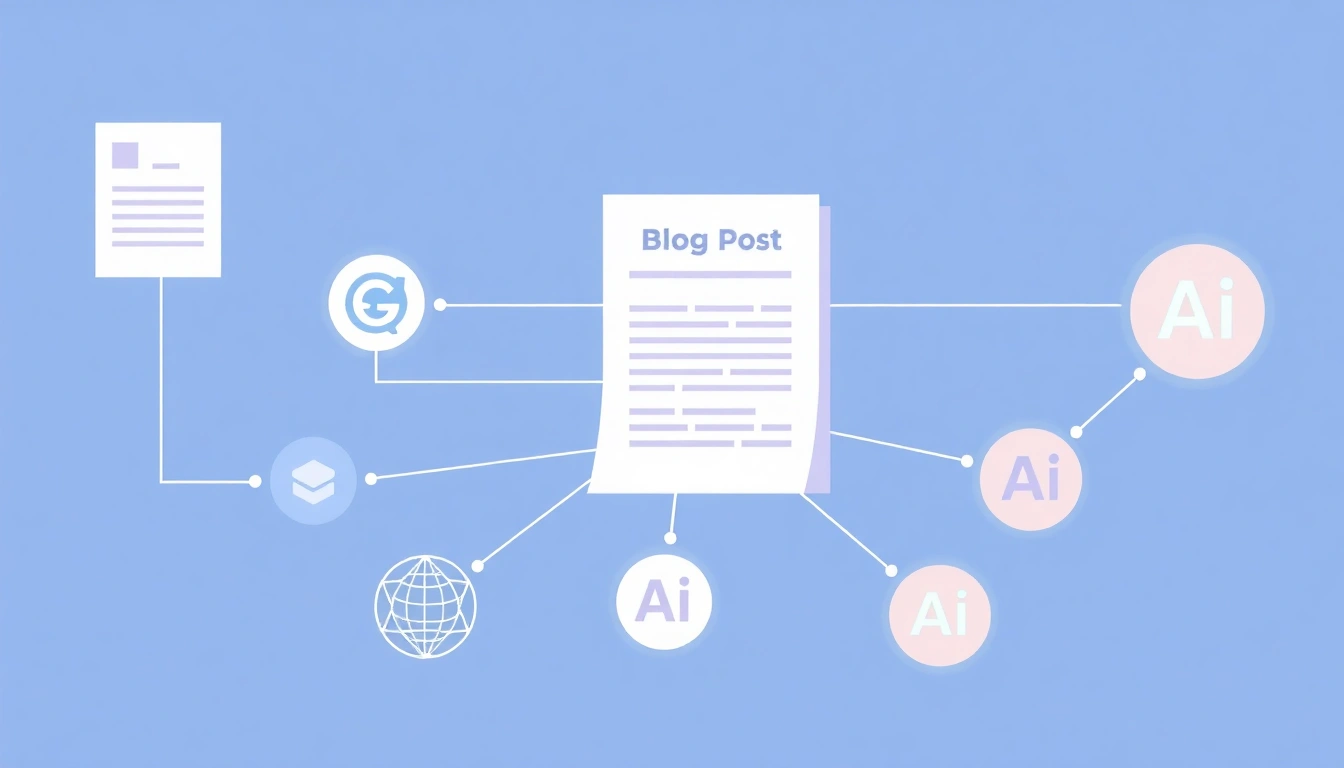
What Is Multimodal Content and Does It Help AI Engines Cite Your Blog?
Multimodal content combines text with images, video, charts, or audio in a single piece. But when it comes to AI engine citation, the relationship is more nuanced than most marketers expect. Here is what the evidence actually shows.
8 min readWhat Is Confidence Scoring and How Do AI Engines Use It to Decide Which Sources to Trust?
Confidence scoring is the internal ranking mechanism AI engines use to evaluate how much they trust a source before citing it in a generated answer. Understanding how it works is the first step to getting your content selected. This post breaks down the definition, the key signals, and what it means for your visibility.
7 min read