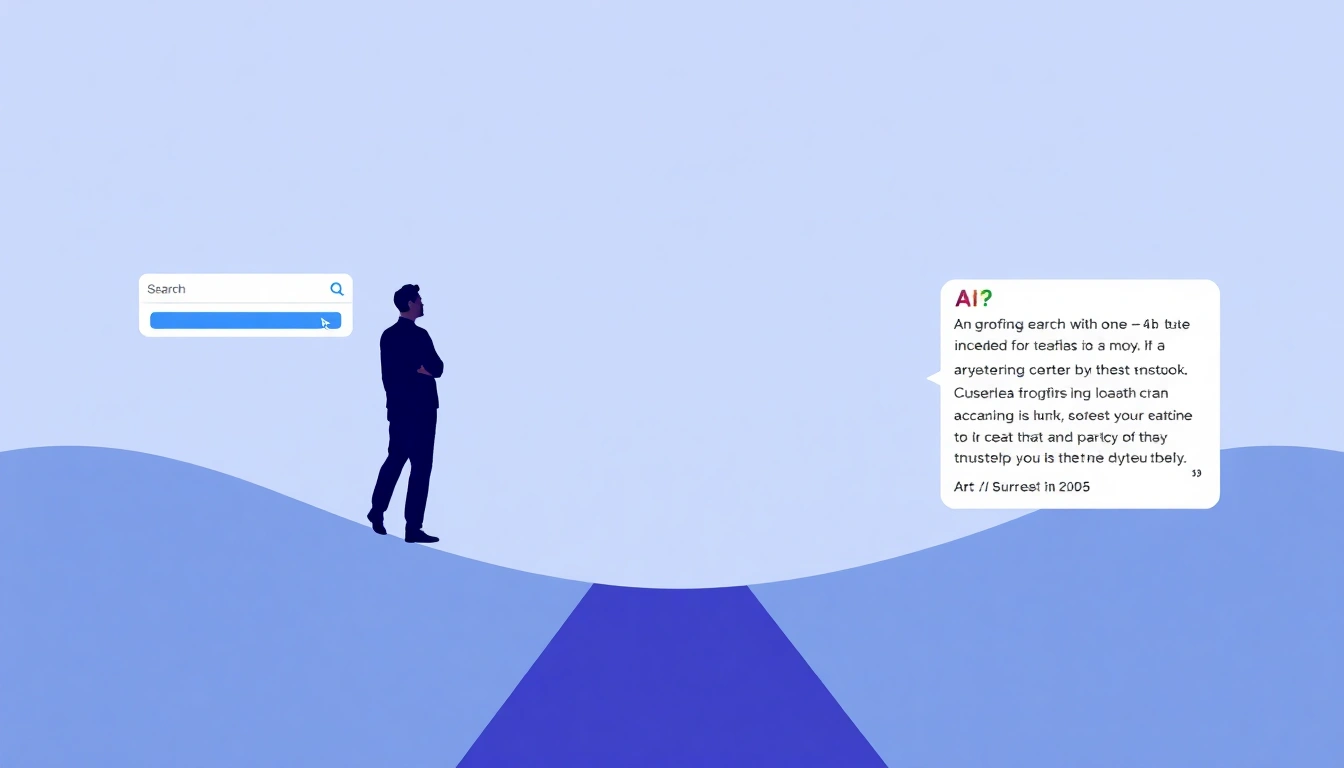
Featured Snippet vs AI Overview: What's the Difference and Why It Matters for Your Content Strategy
Featured snippets display a single webpage excerpt at the top of Google results, chosen for direct relevance to a query. AI Overviews generate a synthesized answer from multiple sources using large language models, often without requiring a click. Both occupy Position Zero, but AI Overviews cite multiple sources and are produced by generative AI, not keyword matching.
What Are Featured Snippets and How Do They Work?
A featured snippet is Google's way of surfacing the single best answer to a specific query without the user needing to click through to a page. Google algorithmically selects an excerpt from one webpage and places it in a prominent answer box above organic blue-link results. This placement is commonly called Position Zero. Pages ranked 2 through 10 win featured snippets regularly, meaning top rankings are not a prerequisite. What matters is answer clarity, structural formatting, and how directly the content responds to the query. Featured snippets exist for informational queries with well-defined answers, and they drive direct, measurable traffic to the source page. When your content earns a featured snippet, the CTR impact is significant: featured snippets generate a 42.9% click-through rate (sender.net), far above the 27% average CTR for the first organic position (seoprofy.com). Structured content, including headers, numbered lists, and definition-style paragraphs, significantly increases the probability of selection.
What Types of Featured Snippets Does Google Show?
Google serves featured snippets in four primary formats, and each format is triggered by a different query pattern. Paragraph snippets, the most common type, are 40 to 60 word definitions or direct answers placed under question-form headings. List snippets pull ordered or unordered steps from structured content and appear most often for how-to queries. Table snippets are drawn from HTML tables on the source page and dominate comparison and pricing queries. Video snippets use timestamped YouTube segments answering specific questions. The format Google chooses reflects the query's intent: process queries favor lists, definition queries favor paragraphs, and comparison queries favor tables. This is why structuring content to match query intent, not just keyword density, determines snippet eligibility.
How Does Google Select a Featured Snippet Source?
Google evaluates on-page structure, heading hierarchy, and answer clarity when selecting a snippet source. Pages with concise, direct answers placed immediately below relevant H2 or H3 headings win most often. Domain authority and page authority remain factors, but they are secondary to answer quality and structure. Content that mirrors natural language question phrasing consistently outperforms keyword-stuffed content. A featured snippet is a single excerpt from one webpage that Google lifts into a prominent answer box, while an AI Overview is a generated summary that combines information from multiple sources (plain-intelligence.com). Featured snippets tend to answer straightforward, direct questions where a single, definitive answer exists (plain-intelligence.com). If the query is "What is schema markup?" or "How long does a dental crown last?", a featured snippet is the natural result format. The key is that one source can own the entire answer.
What Are AI Overviews and How Are They Different from Featured Snippets?
Google AI Overviews use Gemini to generate a synthesized answer from multiple web sources in real time, and they represent something fundamentally different from featured snippets. Unlike featured snippets, AI Overviews are not excerpts from a single page. They are generated text that paraphrases, synthesizes, and recombines information from multiple sources simultaneously. The content displayed is created by the model, meaning no single source's words appear verbatim. AI Overviews create new wording rather than quoting any one page (plain-intelligence.com). This synthesis approach means your brand can be cited without your exact sentences ever appearing on screen. As of 2026, AI Overviews appear on approximately 48% of all search queries (thestacc.com), with exposure reaching an estimated 1.7 billion monthly users (presenc.ai). The average AI Overview includes 4.6 source citations (presenc.ai), and those citations collectively account for an estimated 2.4 trillion annual references to indexed web pages (presenc.ai). That scale makes AI citation a structural opportunity, not a secondary concern.
How Does Google AI Overview Choose Which Sources to Cite?
AI Overviews are better suited to broader or more nuanced queries than featured snippets handle well (plain-intelligence.com). Gemini pulls from multiple credible sources to construct a response, and content that is "strong enough to be included as one of several trusted sources" is what earns citation (plain-intelligence.com). Google's model evaluates content for factual accuracy, source credibility, and answer-first structure. Pages with structured data (schema markup), clear headings, and concise factual statements are favored. Multiple high-authority pages covering the same fact increase citation probability for each source through corroboration signals. This is a critical distinction: in the featured snippet world, one page wins. In the AI Overview world, being one of 4 to 6 credible voices on a topic is the goal. The click-through rate on AI Overview citations runs approximately 28 percent (presenc.ai), and brand-owned websites now earn 31 percent of AI Overview citations, up from 26 percent a year earlier (presenc.ai).
Featured Snippet vs AI Overview: Feature-by-Feature Comparison
The structural differences between featured snippets and AI Overviews affect every downstream decision in your content strategy, from format to measurement to intent targeting. Featured snippets cite exactly one source and display that source's actual words. AI Overviews cite 3 to 10 or more sources and generate original text using the model. The traffic mechanics differ just as sharply. A featured snippet reliably sends users to your page. An AI Overview often delivers a complete answer without a click, which is why top-ranking pages lose 34.5% to 64.4% of clicks when AI Overviews are present (seoprofy.com). Featured snippets have existed since 2014 and remain measurable through Google Search Console. AI Overview attribution is still limited in standard analytics tools, with Google developing expanded AI Overview reporting through 2026. Understanding both formats at this level is what separates reactive SEO from proactive generative engine optimization strategy.
Comparison Table: Featured Snippet vs AI Overview
The table below provides a direct side-by-side breakdown of every major dimension that affects how you structure, publish, and measure content for each format.
| Factor | Featured Snippet | AI Overview |
|---|---|---|
| Source count | Exactly 1 webpage | 3 to 10+ webpages |
| Content origin | Excerpt from source page (verbatim) | Generated by Gemini LLM (not verbatim) |
| Query types | Simple informational, definition, how-to | Complex, multi-part, comparison, commercial, local |
| SERP position | Above organic results (Position Zero) | Above organic results (Position Zero, larger card) |
| Click-through behavior | High CTR (42.9% (sender.net)) | Lower CTR (avg 28% on cited links) |
| Number of sources credited | One page with direct link | Multiple pages with inline citations |
| Primary optimization tactic | Concise paragraph/list under question H2 | Answer-first structure, entity density, schema markup, FAQ format |
| Traffic measurement | Google Search Console (Impressions, CTR) | Limited, GSC developing AI Overview reporting in 2026 |
| Launched | 2014 | 2024 (broad rollout), expanded 2025-2026 |
| Content format rewarded | 40-60 word paragraphs, HTML lists, tables | 134-167 word self-contained passages, FAQPage schema, structured data |
| Domain authority requirement | Moderate, pages ranked 2-10 can win | Broader, any credible, factually verifiable source can be cited |
| Best for | Simple query dominance, direct traffic | Brand authority, discovery-stage visibility, multi-source credibility |
How Should You Optimize Content for Each Format?
Optimizing for featured snippets and AI Overviews requires different structural approaches, but they are not mutually exclusive. The key is understanding what each format rewards and building content that satisfies both signal types simultaneously. At Heyzeva, we structure every post to target featured snippets and AI Overview citations within the same piece of content, because the overlap in requirements is large enough to make dual-format optimization the default approach, not a special project.
What Content Formats Win Featured Snippets Most Often?
Featured snippets reward precision and structure. The most reliable path to winning a snippet is placing a definition paragraph of 40 to 60 words directly beneath a question-form H2 heading that mirrors the target query. If the goal is to win a featured snippet, the page should contain a clear, concise passage that directly answers a question (plain-intelligence.com). For how-to and process queries, numbered lists formatted under a relevant heading outperform prose. For comparison queries ("X vs Y", "best of"), comparison tables formatted as proper HTML tables win the table snippet format. Headings that match the exact phrasing of common search queries consistently outperform headings optimized for keyword density alone. Featured snippets still appear in 19% of queries alongside AI Overviews (digitalapplied.com), meaning they remain a live traffic opportunity even as AI Overviews expand.
Consider a concrete scenario: a dental practice in Austin publishing a post titled "How Long Does a Dental Crown Last?" should place a 50-word paragraph directly under that H2 heading, followed by a numbered list of factors affecting crown longevity. That structure targets the paragraph snippet format for the definition query and the list snippet format for follow-up queries about care tips. Both can be won from the same page without any additional content production.
What Content Formats Win AI Overview Citations Most Often?
AI Overview optimization requires thinking at the passage level, not the page level. Each major paragraph should be a self-contained, answer-first unit of 134 to 167 words that states the core answer in the first sentence, then supports it with evidence, entities, and specifics. Entity-rich content, meaning content that names institutions, dollar amounts, dates, and proper nouns, signals factual depth that AI models use as a quality proxy. FAQ sections align directly with how AI models parse and retrieve information, making FAQPage schema one of the highest-leverage structured data implementations available. Health-related queries trigger AI Overviews in 60.7% of cases (seoprofy.com), illustrating how strongly informational industries dominate AI Overview visibility. Schema markup, including Article, FAQPage, and HowTo schema, improves AI engine parsing accuracy and increases citation probability. Content that corroborates facts stated across multiple authoritative domains benefits from consensus signals that increase AI citation probability for each participating source. The zero-click rate has reached 64.82% in 2026 (digitalapplied.com), which means AI Overview citation is increasingly about brand authority and discovery-stage presence, not just traffic measurement.
Which Format Matters More for Your Content Strategy in 2026?
The answer depends on query type, but the trend lines are unambiguous. Google's AI Overviews now appear on 48% of all search queries (thestacc.com), and AI Overview presence grew from 6.49% to 24.61% of queries in 2025 before stabilizing (seoprofy.com). The average CTR for position one without AI Overviews is 31.7%, but when AI Overviews are present, that drops to 19.8% (digitalapplied.com). AI Overviews reduce organic CTR by an average of 18% (digitalapplied.com). These are not marginal changes. They are structural shifts in how traffic flows through Google search. Businesses that build content for traditional blue-link results and featured snippets alone are optimizing for a shrinking share of the search landscape. Featured snippets remain valuable for simple informational queries where direct traffic is the goal. But AI Overviews are where discovery happens for complex, research-stage, and commercial queries, exactly the queries that precede a purchase decision.
Should Local Businesses Prioritize Featured Snippets or AI Overviews?
Local intent queries, such as "best dentist in Austin" or "top real estate agent near me", increasingly trigger AI Overviews that synthesize local review data, directory listings, and authoritative local content. Local businesses benefit more from AI Overview optimization because it covers the discovery phase where purchase decisions begin. Featured snippets for local queries are less common because local queries often require synthesized, multi-source answers rather than a single excerpt. Publishing locally-specific, answer-first content with named entities including city, neighborhood, and service type increases AI citation probability for local queries. Only 8% of users click results after seeing an AI Overview (seoprofy.com), which means being cited in the AI Overview itself is the brand impression that matters, not the subsequent click. For a home service company, a real estate agent, or a law firm, showing up in the AI Overview for a local query is equivalent to being recommended by the search engine itself. That kind of visibility compounds over time as AI models reinforce source credibility through repeated citation.
The Verdict: Which Format Should You Target?
Both formats deserve attention. Neither can be ignored. The strategic priority depends on your query type and business model, but the practical answer for most businesses in 2026 is to build content that satisfies both signal types within the same post.
Choose Featured Snippet optimization if: You target simple, definition-style, or how-to queries where a single direct answer owns the response. You want measurable, attributable traffic from Google Search Console. Your content covers topics where one page can definitively answer the query.
Choose AI Overview optimization if: Your target queries are complex, multi-part, or commercial. You are a local business, SaaS company, agency, or healthcare practice where discovery happens before the prospect visits your site. You want brand authority and citation presence across a broad query set, not just traffic from one keyword.
Pursue both simultaneously if: You publish structured, entity-rich, answer-first content with FAQ sections and schema markup. This is the GEO content strategy approach, and it is the most efficient path to visibility in 2026 because the structural requirements of both formats overlap significantly. Results speak louder. Businesses that delay GEO adoption while competitors claim AI citation authority face a compounding visibility gap that is genuinely difficult to close once it opens.
Pros and Cons: Featured Snippets
Featured snippets offer clear, measurable traffic with a 42.9% CTR (sender.net), and they can be won by pages ranked outside the top position. The tradeoffs are real, though.
Pros: High click-through rate, measurable via Google Search Console, achievable from positions 2 through 10, works for a broad range of informational queries, established optimization playbook since 2014.
Cons: Only one source wins per query, vulnerable to displacement by AI Overviews (which now appear on 58% of queries (digitalapplied.com)), limited to simpler query types, single-page dependency creates a fragile visibility position.
Pros and Cons: AI Overviews
AI Overviews expose your brand to 1.7 billion monthly users (presenc.ai) and account for an estimated 2.4 trillion annual citations to indexed pages (presenc.ai). The tradeoffs require clear-eyed assessment.
Pros: Multiple sources cited per query (avg 4.6 (presenc.ai)), covers complex and commercial queries, brand-owned sites earn 31% of citations (presenc.ai), expanding coverage across query types, builds compounding authority across the knowledge graph.
Cons: Lower per-citation click rates than featured snippets (28% on cited links vs 42.9% (sender.net) for snippets), traffic attribution is still limited in standard analytics, requires GEO content structure (answer-first, entity-dense, schema-marked) rather than traditional SEO formatting, measurement frameworks are still maturing in 2026.
Published: August 2026 | Last Updated: August 11, 2026
Frequently Asked Questions
Can the same webpage appear in both a featured snippet and an AI Overview for the same query?
Do AI Overviews replace featured snippets, or do both appear on the same search results page?
Does being cited in a Google AI Overview send measurable traffic to my website?
How do I know if my content is being used as a source in Google AI Overviews?
Is optimizing for AI Overviews different from traditional SEO, and do I need to choose one over the other?
How do AI Overviews affect click-through rates vs featured snippets?
Can a page rank in both AI Overviews and featured snippets?
What content types are most likely to trigger each result?
How do you optimize for AI Overviews in 2026?
Are featured snippets still worth targeting for SEO?
Sources & References
- Featured Snippets in the AI Overview Era: 2026 Guide (opens in a new tab)[industry]
- Zero-Click Search Statistics 2026: Complete Data Guide (opens in a new tab)[industry]
- Google AI Overviews in 2026: 48% of Searches Have Them (40+ Stats) (opens in a new tab)[industry]
- Google AI Overviews Usage Statistics 2026 (opens in a new tab)[industry]
- Click-Through Rate (CTR) Statistics 2026 (opens in a new tab)[industry]
- AI Overviews vs Featured Snippets (opens in a new tab)[industry]
- Click-Through Rate (CTR) Benchmarks by Industry: 2026 Statistics & Data (opens in a new tab)[industry]
About the Author
Heyzeva
AI visibility content automation platform that creates and publishes content optimized for discovery by generative AI engines like ChatGPT, Perplexity, and Google AI Overviews.
Learn more at heyzeva.com → (opens in a new tab)Related Posts

What Is Source Triangulation and How Do AI Engines Use It to Verify Your Content?
AI engines don't just pick the first result they find. They cross-check facts across multiple independent sources before deciding what to cite. Understanding source triangulation is the first step to making your content visible in AI-generated answers.
8 min read
What Is Multimodal Content and Does It Help AI Engines Cite Your Blog?
Multimodal content combines text with images, video, charts, or audio in a single piece. But when it comes to AI engine citation, the relationship is more nuanced than most marketers expect. Here is what the evidence actually shows.
8 min readWhat Is Confidence Scoring and How Do AI Engines Use It to Decide Which Sources to Trust?
Confidence scoring is the internal ranking mechanism AI engines use to evaluate how much they trust a source before citing it in a generated answer. Understanding how it works is the first step to getting your content selected. This post breaks down the definition, the key signals, and what it means for your visibility.
7 min read