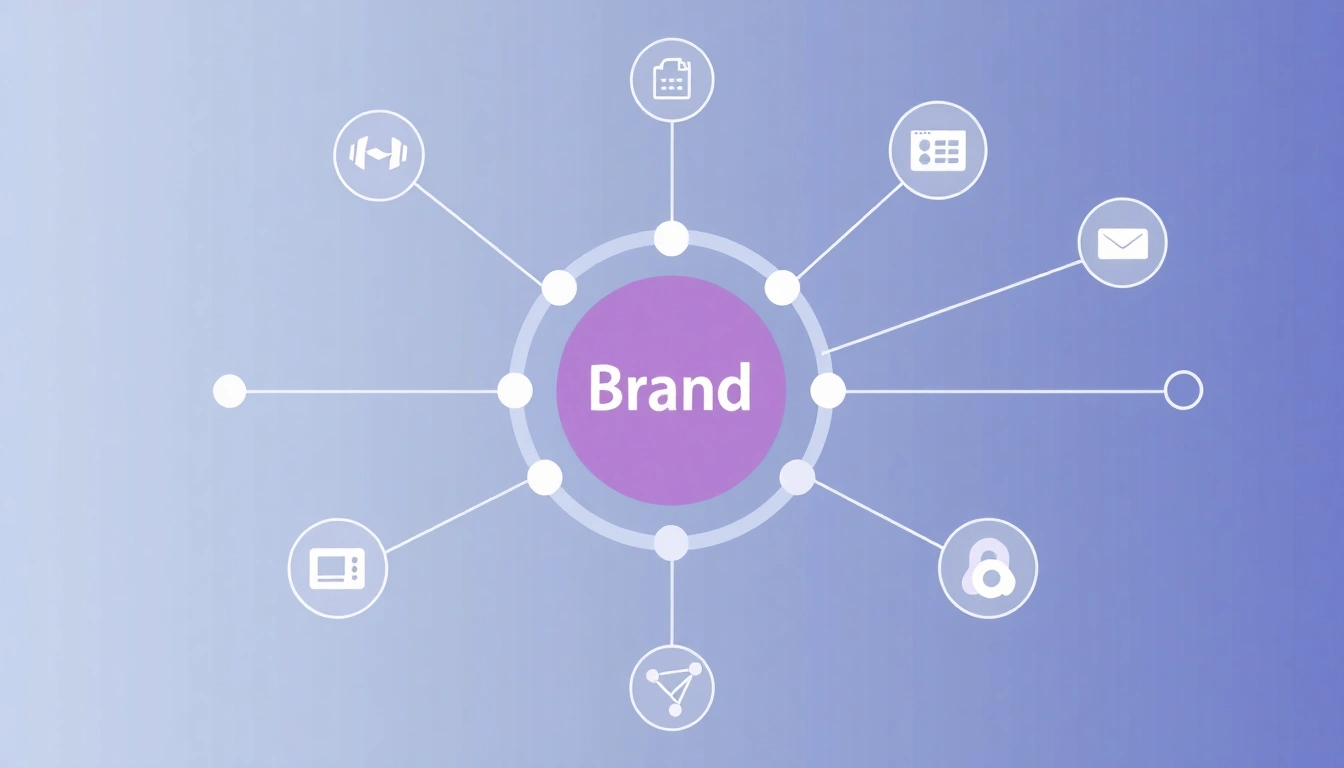
Entity disambiguation is the process AI engines use to identify which specific person, brand, or organization a piece of content refers to, even when names overlap. For brands, it determines whether ChatGPT, Perplexity, or Google AI Overviews correctly recognize and cite your business, rather than confusing you with a competitor or ignoring you entirely.
How Does Entity Disambiguation Work?
AI engines do not read content the way humans do. They build structured knowledge graphs that connect each entity to a unique set of verified attributes: industry category, geographic location, founding date, products, and web presence. Google's Knowledge Graph alone contains over 500 billion facts about 5 billion entities (geo-score.online). When two brands share a name, or when a brand name resembles a common word, disambiguation signals tell the engine which entity is actually being discussed. Those signals include structured data markup, consistent NAP (Name, Address, Phone) data, co-citations from authoritative sources, and Wikidata identifiers.
The disambiguation process matters because AI engines only cite entities they can confidently identify. An analysis of 15,847 AI Overview results across 63 industries found that pages with 15 or more connected entities show a 4.8x higher selection probability in AI Overviews than entity-sparse pages on identical topics (geo-score.online). That gap is not about content quality. It is about whether the engine can resolve who published it.
What Are the Core Signals That Resolve Entity Ambiguity?
Four signals do most of the disambiguation work. Each one adds a layer of specificity that helps AI engines build a reliable, unique identity for your brand.
Co-citation is the correlation between your brand name and consistent attributes across third-party sources. Brand mentions on third-party sites correlate at r=0.62 with AI citation rate, substantially higher than backlink correlation at r=0.31 (roast.page). When authoritative publications, directories, and press outlets repeatedly reference your brand name alongside the same founding year, location, and product category, AI engines lock those attributes to your entity.
Structured data is the most direct disambiguation tool available to any website. Organization or LocalBusiness schema embeds your brand name, URL, address, and founding date in a machine-readable format that AI engines parse before they even read the page body. Structured data markup delivers a 73% selection boost for AI Overview inclusion (geo-score.online). Despite this, only 22% of business websites pass Google's Rich Results Test cleanly across all detected schema types (digitalapplied.com).
NAP consistency across Google Business Profile, LinkedIn, Apple Maps, Bing Places, and niche directories reinforces that all those listings belong to a single, real-world entity. Inconsistent addresses or phone numbers create conflicting attribute sets that introduce ambiguity.
Entity salience measures how prominently your brand appears in topically relevant, indexed content. A dentist practice in Austin that publishes authoritative dental-health content and earns citations from local health directories builds salience in the dental-care entity cluster. Salience signals entity relevance within a category, not just existence.
Why Does Entity Disambiguation Matter for AI Engine Brand Recognition?
AI engines like ChatGPT, Perplexity, Claude, and Google AI Overviews synthesize answers from indexed content, and they only name brands they can confidently identify. An ambiguous entity gets omitted from those answers, even when it has deep, genuine expertise. Consider a boutique law firm named Summit Law Group. If another regional firm shares a similar name, or if the brand's own website, LinkedIn profile, and Google Business Profile present slightly different variations of the name, AI engines cannot build a stable entity profile. The firm disappears from AI-generated answers for queries like "best employment attorney near me" and the citations go to a clearly identified competitor instead.
The stakes compound over time. Disambiguated brands accumulate AI citations, which strengthens their entity profile further, which generates more citations. Ambiguous brands fall further behind with every query cycle. Brands appearing in five or more "best of" lists are cited 3.2x more often than brands appearing in zero to one lists (roast.page), partly because those lists serve as co-citation events that reinforce entity attributes at scale.
For local businesses, the consequences are immediate. When a potential patient asks Perplexity for the best dentist in their city, the AI names specific practices it can identify with confidence. An unresolved entity does not appear, regardless of review volume or years in business. At Heyzeva, we have found that structuring content with entity-rich signals, including consistent brand mentions, schema markup, and targeted co-citation sources, gives AI engines everything they need to build an accurate, citable brand profile automatically.
What Happens to Brands That Are Not Disambiguated?
The failure mode is quiet and costly. AI engines default to citing well-known, clearly identified competitors rather than flagging an ambiguity to the user. Brand mentions in user-generated content or reviews may be attributed to a different entity with the same or similar name. A SaaS company named Prism Analytics, for example, may find that AI engines consistently surface a different analytics product under that name because that product has a Wikidata QID, a clean Wikipedia entry, and Organization schema on every page. Traditional SEO investment does not transfer to AI citation if the publishing brand lacks a resolved entity profile. Rankings do not equal recognition in generative AI. A 2026 study of 153,425 citations found that 76.95% of cited URLs were outside the organic top 10, confirming that entity recognition gates citation eligibility before ranking matters (astiva.ai).
How to Improve Your Brand's Entity Disambiguation for AI Engines
Fixing entity disambiguation is not a one-step process, but each step produces a compounding return. The actions below move from foundational to advanced, and every one of them contributes a distinct signal to the entity resolution process.
Step 1: Publish an authoritative About page. Use your exact legal or trade brand name, founding year, primary service category, and geographic focus. Keep this language identical across every digital property. This page becomes the canonical attribute source AI engines reference when building your entity profile.
Step 2: Implement Organization or LocalBusiness schema with the sameAs property. The sameAs property links your entity to external identifiers, your Wikipedia page, Wikidata entry, LinkedIn company page, and Crunchbase listing. This cross-referencing is how AI engines confirm that all those profiles belong to the same entity. Of the five most common schema types in production sites, Organization schema is the most widely deployed at 61% (digitalapplied.com), but most implementations are incomplete. Include foundingDate, description, areaServed, and a specific URL in addition to the name field.
Step 3: Earn co-citations from high-authority, topically relevant sources. Target industry publications, local news outlets, and professional directories in your vertical. A home service company earning a citation from Angi, a local newspaper, and a regional home-builders association creates three distinct co-citation events that reinforce the same entity attributes. Content with clear entity definitions and schema markup sees a 30% improvement in AI citation frequency (rankfender.com).
Step 4: Standardize NAP data across every platform. Audit Google Business Profile, Apple Maps, Bing Places, Yelp, and any niche directory where your brand appears. A single address format mismatch, "Suite 200" versus "Ste. 200" versus no suite number, is enough to fracture the entity signal.
Step 5: Create or claim your Wikidata entry. Wikidata provides your brand with a unique QID identifier that AI training pipelines treat as a canonical entity marker. Wikipedia accounts for 22% of ChatGPT training data and 12-15% of its citations (astiva.ai). A Wikidata entry connected to a Wikipedia article is among the strongest entity anchors available.
Step 6: Publish entity-dense content consistently. Heyzeva's GEO-structured blog automation publishes content that repeatedly references verified brand attributes, founding context, service categories, and geographic focus in formats AI engines can parse and extract. Every post becomes a co-citation event that reinforces your entity profile and accelerates Knowledge Graph inclusion.
| Disambiguation Action | Primary Signal Type | Time to Impact |
|---|---|---|
| Organization schema with sameAs | Structured data | Days to weeks |
| Consistent NAP across directories | Entity consistency | 2 to 6 weeks |
| About page with canonical attributes | On-site entity anchor | Days to weeks |
| Wikidata / Wikipedia entry | Training data identifier | 4 to 12 weeks |
| Co-citations from authority sources | Third-party attribution | 4 to 16 weeks |
| Entity-dense blog content (ongoing) | Entity salience | Compounding over months |
The brands that move first on entity disambiguation build a structural advantage. Once AI engines build a confirmed, cited entity profile for your brand, every new piece of content you publish benefits from that resolved identity. Ambiguous brands publish into a void. Recognized brands publish into a compounding citation engine.
Frequently Asked Questions
What is the difference between entity disambiguation and keyword optimization?
Does my brand need a Wikipedia page to be disambiguated by AI engines?
How long does it take for AI engines to recognize a newly disambiguated entity?
Can a small local business benefit from entity disambiguation, or is this only for large brands?
What schema markup type should I use to help AI engines identify my brand?
What steps can I take to strengthen my brand's entity signals?
How does Organization schema help AI identify my brand?
How can I tell whether AI engines are confusing my brand?
Which online sources most influence my brand's knowledge graph?
How long does entity disambiguation typically take to improve visibility?
Sources & References
- Schema Markup Adoption: 5,000-Site Audit and Findings (opens in a new tab)[industry]
- Wikipedia and AI Visibility: The Pillar Guide for 2026 (opens in a new tab)[industry]
- AI Citation Statistics 2026 — 25+ Data Points on ChatGPT, Claude, Perplexity Citations (opens in a new tab)[industry]
- Knowledge Graph: Entity-Rich Content Gets 4.8x More AI Citations (opens in a new tab)[industry]
- 30+ AI Visibility Statistics for 2026 (Verified & Cited) (opens in a new tab)[industry]
About the Author
Heyzeva
AI visibility content automation platform that creates and publishes content optimized for discovery by generative AI engines like ChatGPT, Perplexity, and Google AI Overviews.
Learn more at heyzeva.com → (opens in a new tab)Related Posts

What Is Source Triangulation and How Do AI Engines Use It to Verify Your Content?
AI engines don't just pick the first result they find. They cross-check facts across multiple independent sources before deciding what to cite. Understanding source triangulation is the first step to making your content visible in AI-generated answers.
8 min read
What Is Multimodal Content and Does It Help AI Engines Cite Your Blog?
Multimodal content combines text with images, video, charts, or audio in a single piece. But when it comes to AI engine citation, the relationship is more nuanced than most marketers expect. Here is what the evidence actually shows.
8 min readWhat Is Confidence Scoring and How Do AI Engines Use It to Decide Which Sources to Trust?
Confidence scoring is the internal ranking mechanism AI engines use to evaluate how much they trust a source before citing it in a generated answer. Understanding how it works is the first step to getting your content selected. This post breaks down the definition, the key signals, and what it means for your visibility.
7 min read