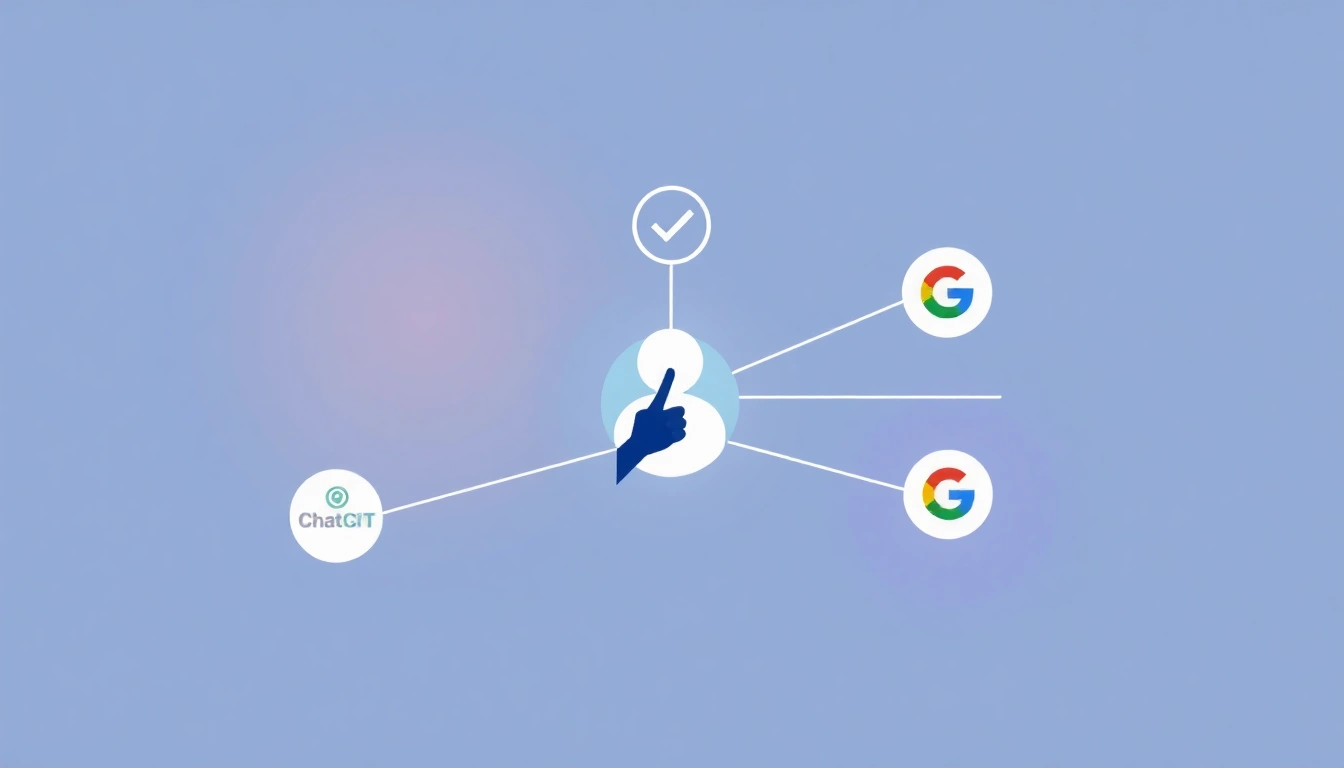
Entity authority is an AI engine's confidence score in a brand as a real, credible, and topic-relevant source. Engines like ChatGPT, Perplexity, and Google AI Overviews assess entity authority using structured data, citation frequency across authoritative domains, factual consistency, and topical depth before deciding whether to cite a brand in generated answers.
How AI Engines Actually Measure Entity Authority
Before any AI engine evaluates your content, it asks a more fundamental question: "Who is this brand, and can I verify it exists?" This identity-first evaluation is what separates generative engine optimization from traditional SEO. AI engines treat your brand as an "entity", a distinct, named object with verifiable attributes, and they check whether trustworthy third-party sources corroborate what your own website claims. Brands with clearer identity, stronger external validation, and more consistent web presence are systematically more likely to be recognized, cited, and recommended in AI-generated answers. Google's Knowledge Graph currently holds 500 billion+ facts on 5 billion+ entities (digitalapplied.com), giving AI engines an enormous reference graph to cross-check brand claims against.
Four primary signals drive entity authority scores: structured data markup (Schema.org), citation frequency across trusted third-party domains, factual consistency of brand claims across the web, and topical depth in a defined subject area. Google's Knowledge Graph and similar entity graphs used by Perplexity and ChatGPT map relationships between your brand, the topics you cover, and the sources that reference you. Brands with consistent NAP (Name, Address, Phone) data, Wikidata entries, and verified Google Business Profiles score higher entity confidence. Critically, entity authority is less about raw popularity and more about consistent identity, corroborating evidence, and recognition across the web. A brand cited 50 times across 20 different trusted domains outranks one with a single high-traffic post on its own site. Brand mention correlation with AI Overview visibility is 0.664 versus 0.218 for backlinks, making brand mentions 3x stronger than backlinks as an AI visibility signal (digitalapplied.com).
What Role Does Structured Data Play in Entity Recognition?
Schema.org markup, specifically Organization, LocalBusiness, Article, and FAQPage schemas, gives AI engines machine-readable confirmation of who you are and what you do. Without structured data, AI engines must infer your brand identity from unstructured text, a lower-confidence process that reduces citation probability. The numbers are stark: schema-marked pages are cited 2.3x more often in Google AI Overviews (everything-pr.com), and valid schema correlates +0.34 with AI-search citation rate across a 5,000-site audit (digitalapplied.com). Yet only 22% of audited sites pass Google's Rich Results Test cleanly (digitalapplied.com), meaning the majority of brands leave this citation multiplier on the table. Brands using Organization schema with consistent sameAs properties linking to LinkedIn, Crunchbase, and Wikidata entries are far more likely to be recognized as distinct entities. This is a structural advantage that compounds over time.
Why Does Third-Party Citation Frequency Matter So Much?
AI engines weight external mentions of your brand on authoritative domains, industry publications, .edu and .gov sites, recognized aggregators, as trust signals. Wikipedia accounts for 22% of ChatGPT training data and 12-15% of its citations (astiva.ai), which is why a Wikipedia or Wikidata entry carries outsized entity authority value. Only 11% of domains are cited by both ChatGPT and Perplexity (5wpr.com), which shows how concentrated AI citation authority actually is. PR coverage, podcast guest appearances, directory listings in recognized aggregators, and co-citations alongside established brands all contribute to citation graph density. Consider a SaaS founder who earns three guest bylines in recognized industry publications within 90 days: each placement creates a new node in the AI citation graph, linking the brand name to a trusted domain and a specific topic cluster. At Heyzeva, our content architecture is specifically engineered to generate the answer-first structure and factual density that make posts citable, which then feeds back into entity authority as those posts earn inbound links and AI citations. That compounding structure is exactly what AI engines look for. At Heyzeva, our content architecture is specifically engineered to generate the answer-first structure and factual density that make posts citable, which then feeds back into entity authority as those posts earn inbound links and AI citations.
Why Entity Authority Determines Brand Visibility in AI-Generated Answers
AI engines like Perplexity, Google AI Overviews, and ChatGPT with Browse do not index pages the way traditional search does. They synthesize answers from sources they have already deemed trustworthy entities. Brands with low entity authority are functionally invisible in AI-generated answers even if they rank on page one of Google, because the two systems use different criteria. The divergence is accelerating: only 38% of cited pages also rank in the top 10 organic results, down from 76% in mid-2025 (everything-pr.com). Google AI Overviews now render for 82% of B2B tech queries (everything-pr.com). This matters for every brand category, from SaaS companies to local service providers.
The stakes are especially clear for local businesses. A dentist in Austin with no Wikidata entry, sparse Google Business Profile reviews, and no structured data will never appear when a user asks ChatGPT to recommend dentists in Austin, regardless of website quality. The local SEO signals that once dominated, citation directories, review volume, proximity, now need to be paired with entity-level trust signals to generate AI visibility. Building entity authority is a compounding investment. Each new authoritative citation, each structured data implementation, and each consistent brand mention raises the confidence threshold AI engines assign to your brand permanently.
How Entity Authority Differs from Traditional Domain Authority
Domain Authority (DA), developed by Moz, is a link-based metric reflecting the strength of a website's backlink profile. It says nothing about who the brand is or what it is an expert in. Entity authority is identity-based and topic-scoped: it answers whether AI engines recognize your brand as a real, credible expert on a specific subject. A site can have DA 70 and near-zero entity authority if its brand has no structured data, no external citations that name the brand explicitly, and no consistent topical focus. The top 1% of domains in Google AI Overviews capture 47% of all citations (everything-pr.com), and DA alone does not explain that concentration. Entity clarity does. Conversely, a newer brand can build high entity authority quickly through answer-first content architecture, Schema markup, and targeted PR citations, outperforming higher-DA competitors in AI-generated answers.
How to Build Entity Authority So AI Engines Cite Your Brand
Building entity authority follows a deliberate sequence. Each step addresses a specific signal that AI engines use when evaluating whether to cite a brand. Skipping steps creates gaps that undermine the whole structure.
Step 1: Establish your entity baseline. Create or claim a Wikidata entry, verify and complete your Google Business Profile, and add Organization schema with sameAs links to all major directories. This gives AI engines a machine-readable identity anchor.
Step 2: Publish answer-first content structured for AI extraction. Each post should open with a 40-60 word direct answer, use descriptive H2 headings, and cite verifiable statistics with source attribution. This is the exact passage format Google AI Overviews and Perplexity extract for citations.
Step 3: Build your citation graph. Earn mentions on authoritative third-party domains through digital PR, guest posts, podcast appearances, and directory submissions. A realistic near-term target is 3-5 placements per quarter on domains with established editorial standards. Each placement adds a corroborating node to your entity graph.
Step 4: Maintain factual consistency. Every mention of your brand name, founding date, product description, and core claims must match across your website, social profiles, press mentions, and structured data. Inconsistency is one of the primary causes of AI engines confusing similar brands or assigning low confidence scores.
Step 5: Publish at topical depth, not breadth. Thirty posts covering generative engine optimization build stronger entity authority in that domain than 30 posts on 30 unrelated topics. In our experience, this topical clustering approach is what separates brands that gain sustained AI visibility from those that publish sporadically across unrelated subjects. Topical clusters signal domain expertise to Knowledge Graph evaluators in a way that scattered content cannot.
Results speak louder. Brands that implement all five steps see citation probability increase across multiple AI platforms, not just one. The compounding nature of entity authority means early movers in any category hold a structural advantage that grows harder to displace over time.
What Content Structure Heyzeva Uses to Engineer Entity Authority
Heyzeva's GEO content architecture addresses each of the five steps above at scale. Every post opens with a standalone 40-60 word direct answer, the exact passage format Google AI Overviews and Perplexity extract for citations. Posts are built around descriptive H2 headings with immediate direct answers, a pattern consistently found in cited content across AI platforms. Every post includes FAQPage, Article, and Organization schema, plus 15 or more specific entities (named institutions, dollar amounts, proper nouns) to hit the entity density threshold correlated with higher AI Overview citation probability. The platform publishes consistently at topical depth, building the cluster of related posts that signals domain expertise to Knowledge Graph evaluators. For a marketing agency managing 20 client accounts, this means GEO-structured, Schema-annotated content at scale, without hiring a GEO specialist for every account.
Frequently Asked Questions
How long does it take to build entity authority with AI engines?
Can a small local business build entity authority without a Wikipedia page?
Does entity authority affect all AI engines the same way, or does it differ by platform?
What is the difference between entity authority and topical authority?
How do I check if AI engines currently recognize my brand as a trusted entity?
How do AI engines measure entity authority?
What trust signals increase brand citations in AI search?
How is brand authority different from citation authority?
How can I build entity authority for my brand?
What causes AI engines to confuse similar brands?
Sources & References
- Schema Markup Adoption: 5,000-Site Audit and Findings[industry]
- Wikipedia and AI Visibility: The Pillar Guide for 2026[industry]
- Entity SEO & Knowledge Graph Optimization Guide 2026[industry]
- The State of AI Citations 2026 Research Report[industry]
- Google AI Overviews Citation Source Index 2026[industry]
About the Author
Heyzeva
AI visibility content automation platform that creates and publishes content optimized for discovery by generative AI engines like ChatGPT, Perplexity, and Google AI Overviews.
Learn more at heyzeva.com →Related Posts

What Is Contextual Relevance Scoring and How Do AI Engines Use It to Pick Sources?
Contextual relevance scoring is the multi-signal process AI engines use to evaluate whether a piece of content is the most accurate, authoritative, and structurally appropriate source to cite in a generated answer. Understanding it is the foundation of Generative Engine Optimization (GEO). This post defines the concept, explains how the scoring works, and shows why it matters for your content strategy.
What Is Passage Indexing and How Does It Help AI Engines Cite Specific Sections of Your Blog?
Passage indexing lets search and AI engines rank or cite individual paragraphs from a page, not just the page as a whole. Understanding how it works is the foundation of any serious Generative Engine Optimization strategy. Here is what every marketer needs to know.

What Is Prompt Grounding and How Does It Determine Which Sources AI Engines Cite?
Prompt grounding is the mechanism AI engines use to tie their generated answers to specific, verifiable external sources rather than relying on training data alone. Understanding it is the first step to getting your content cited. This post explains exactly what prompt grounding is and why it determines which brands appear in AI-generated answers.