
Query-aware content chunking is the process by which AI engines like ChatGPT, Perplexity, and Google AI Overviews break your blog content into discrete, semantically meaningful passages, then match each passage to specific user queries. Blogs structured with self-contained, answer-first sections are cited far more often than traditionally formatted long-form articles.
How Does Query-Aware Content Chunking Work?
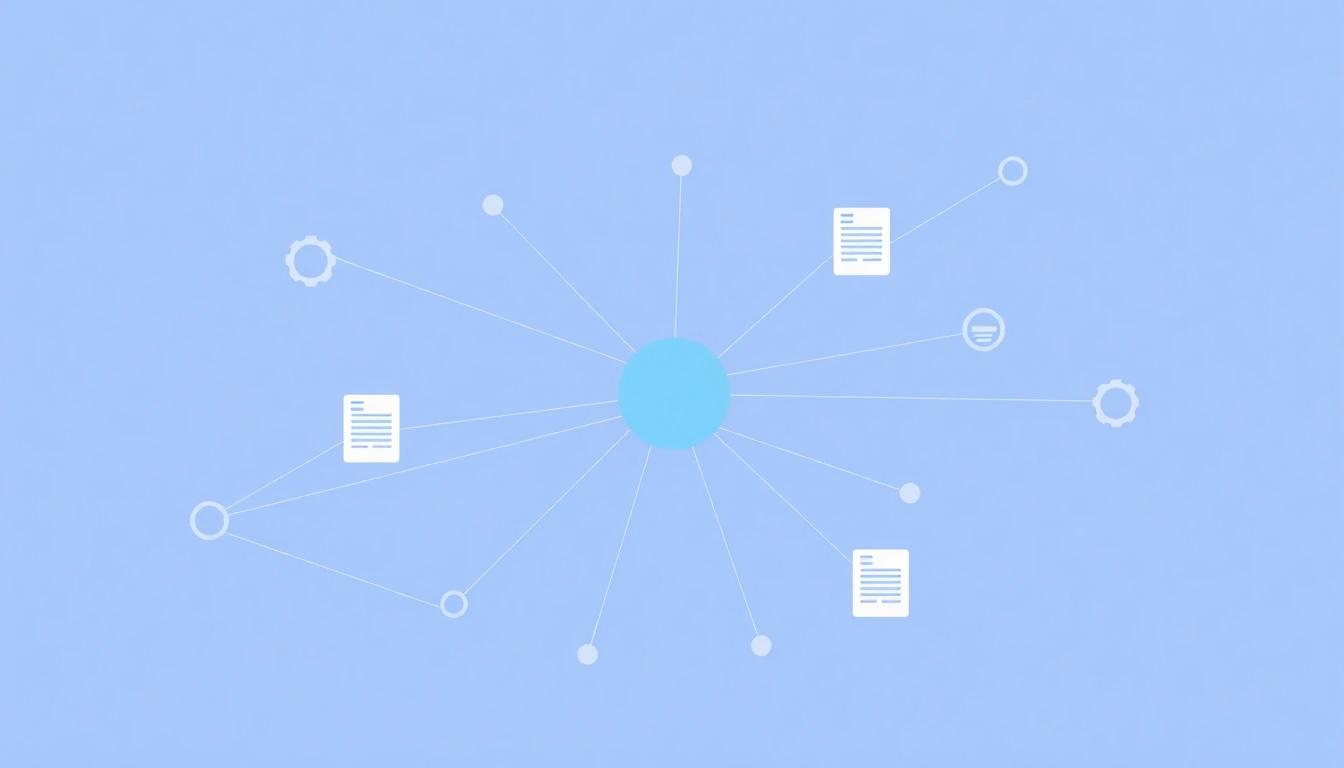
AI search and retrieval-augmented generation systems do not read your blog post as a single document. They segment it into retrieval units called chunks, embed each chunk as a vector, and score every chunk independently against the user's specific query at inference time. The strongest-matching chunks are passed to the language model for answer generation. This means a single blog post can produce multiple cited passages across completely different user queries, compounding your citation surface area across ChatGPT, Perplexity, Google AI Overviews, Claude, and Gemini simultaneously.
Published benchmarks reveal a critical gap in conventional wisdom about chunk size. Semantic chunking, the approach most commonly recommended, produced fragments averaging 43 tokens and scored only 54% end-to-end answer accuracy in the Vecta benchmark (nandigamharikrishna.substack.com). By contrast, plain recursive splitting at 512 tokens scored 69% (nandigamharikrishna.substack.com). Selecting the wrong chunk size degrades context precision by 15-30% (nandigamharikrishna.substack.com). The implication for blog content is direct: passages that are too short lose semantic completeness, while passages that are too long dilute relevance scores.
What Makes a Chunk 'Query-Aware'?
A chunk is query-aware when its opening sentence directly resolves a recognizable user intent, without requiring context from surrounding paragraphs. This self-containment is the structural property that separates cited content from ignored content in AI retrieval pipelines. When an AI engine embeds a chunk and compares it to a user query using cosine similarity, chunks that open with a declarative answer score highest because the semantic signal is concentrated at the top. Specific entities, defined terms, dollar figures, institution names, and numeric facts increase what practitioners call semantic signal density, raising the chunk's relevance score during retrieval. Roughly 80% of RAG system failures trace back to the ingestion and chunking layer (aiagentsbuzz.com), not to the language model itself. The practical takeaway: fixing your content architecture fixes your citation rate.
What Role Do Headings and Structure Play?
AI engines use H2 and H3 tags as chunk delimiters. The heading text becomes part of the chunk's semantic fingerprint, which means a vague or creative heading like "Taking Your Content to the Next Level" contributes almost no retrieval signal. A question-formatted heading like "How does query-aware content chunking work?" directly mirrors natural language queries and boosts cosine similarity during retrieval. Domains that deploy clean TechArticle, FAQPage, and nested PropertyValue schemas are 3.1x more likely to be cited in a Google AI Overview than competing pages with identical textual content lacking semantic markup (aigcmkt.com). Bullet lists and definition blocks are frequently extracted as standalone cited passages because their format signals discrete, verifiable facts to the retrieval model.
Why Does Content Chunking Determine Whether Your Blog Gets Cited?
Google AI Overviews now appear on 48% of all Google searches, up 58% year over year (thestacc.com). When an AI Overview appears, 64.2% of search sessions end without a click to any external website (aigcmkt.com). Your blog is competing for citation inside the AI answer, not just for a click below it. The typical Google AI Overview synthesizes content from an average of 3.8 unique web domains (aigcmkt.com). Only 48.2% of cited domains rank in the traditional top 3 organic positions for the same query (aigcmkt.com), and roughly 83% of AI Overview citations come from pages that do not rank in Google's organic top 10 (loudspeakermarketing.com). Passage-level structure, not page-level authority, determines citation selection.
Traditional long-form SEO articles written as continuous narrative fail chunking tests because individual paragraphs lack standalone meaning. If a paragraph requires the reader to have read the previous three paragraphs to understand its point, the AI retrieval model cannot reliably match it to a user query. The model will cite a competitor whose passage answers the question on its own. This is context loss in action. A clinical study published in MDPI Bioengineering found that adaptive chunking aligned to logical topic boundaries hit 87% accuracy versus 13% for fixed-size baselines in clinical decision support tasks (nandigamharikrishna.substack.com). The same logic applies to blog content: passages aligned to answerable questions outperform arbitrary blocks of text.
How Is This Different from Traditional SEO Optimization?
Traditional SEO optimizes for keyword density, backlink authority, and page-level relevance signals that Google's crawl index evaluates over days or weeks. Query-aware chunking optimizes for passage-level semantic retrieval that happens in real time during AI inference. These are fundamentally different evaluation pipelines, and a page can rank on page one of Google Search while remaining completely invisible to AI engines if its passages lack retrieval structure. Both strategies are now required. The global GEO market is valued at roughly $1.09 billion in 2026 and forecast to grow at a 40.6% compound annual growth rate (loudspeakermarketing.com). AI Overviews appeared on 86.7% of Google searches with buying intent in April 2026 (peec.ai). This is not an emerging trend. It is the current state of search.
How to Structure Your Blog for Query-Aware Chunking
Practical implementation requires a template, not just a theory. Write every H2 section as a 134-167 word self-contained passage. Open each section with a 20-25 word direct answer to the heading question before adding context, examples, or evidence. This answer-first architecture ensures the retrieval model can match your chunk to the query even when it only evaluates the first two sentences. Published guidance on chunk length ranges from roughly 75-150 words for highly focused retrieval passages to 150-300 words for richer semantic sections. The key principle is semantic completeness over a rigid word count: a chunk should answer one question fully, with no dependency on surrounding content.
Consider a concrete example. A SaaS founder publishes a blog post titled "What is generative engine optimization?" If the post is written as a continuous 1,200-word narrative, the AI engine may extract a random 150-word window that starts mid-sentence and contains no direct definition. The post gets ignored. If the same founder writes the first H2 section as a 150-word self-contained definition with a declarative first sentence, that chunk scores high for every variant of the query across ChatGPT, Perplexity, and Google AI Overviews. Adding relevant statistics raises AI visibility by up to 41% (loudspeakermarketing.com), and adding direct quotations lifts it by about 28% (loudspeakermarketing.com). Include specific entities in every chunk: dollar figures, institution names, percentages, product names, and defined terms. Use FAQ schema markup to signal discrete question-answer pairs to AI crawlers, and structure headings as natural language questions that mirror real user queries.
At Heyzeva, we engineer every published blog post with this query-aware chunk architecture from the first draft, automating the structural decisions that most content teams get wrong. The citation results compound over time as each post generates multiple retrievable passages across multiple query variants.
| Chunking Approach | Accuracy | Speed | Best For |
|---|---|---|---|
| Fixed-size (512 tokens) | 69% | Fast | General blog retrieval |
| Semantic chunking | 54% (nandigamharikrishna.substack.com) | 14x slower | Fine-grained domain docs |
| Adaptive / topic-boundary | 87% | Moderate | High-stakes citation content |
| Query-aware (answer-first) | Highest citation rate | Moderate | GEO-optimized blog posts |
Frequently Asked Questions
What is the ideal chunk size for AI engine citation?
Does query-aware chunking work for local business blog content?
How is query-aware content chunking different from semantic SEO?
Can I restructure existing blog posts for query-aware chunking, or do I need to rewrite from scratch?
Does Heyzeva automatically apply query-aware chunking to every post it publishes?
How does query-aware chunking differ from fixed-size or semantic chunking?
What chunk size and overlap work best for improving AI citation accuracy?
How can content structure help AI systems select and cite specific passages?
How do query fan-out and retrieval affect which sources receive citations?
How can you measure whether query-aware chunking improves RAG performance?
Sources & References
- 23 Generative Engine Optimization (GEO) Statistics for 2026 (opens in a new tab)[industry]
- 70+ Generative Engine Optimization (GEO) Statistics for 2026 (opens in a new tab)[industry]
- RAG Chunking Strategies & Embeddings Optimization: The 2026 Benchmark Guide (opens in a new tab)[industry]
- Google AI Overview Statistics 2026: 48% of Searches (opens in a new tab)[industry]
- RAG Chunking Strategies: The Visual Guide (2026 Benchmarks) (opens in a new tab)[industry]
About the Author
Heyzeva
AI visibility content automation platform that creates and publishes content optimized for discovery by generative AI engines like ChatGPT, Perplexity, and Google AI Overviews.
Learn more at heyzeva.com → (opens in a new tab)Related Posts
What Is Inverse Citation Risk and How Do AI Engines Penalize Low-Quality Sources?
Publishing low-quality content does not just fail to earn AI citations — it actively signals to AI engines that your domain is an unreliable source. Inverse citation risk is the measurable reputational penalty that accumulates when blogs publish thin, unverifiable, or poorly structured content. Understanding it is the first step to avoiding it.
7 min read
What Is Authoritative Sourcing and How Do AI Engines Decide Which Blogs Count as Primary Sources?
Authoritative sourcing is the process by which AI engines like ChatGPT, Perplexity, and Google AI Overviews evaluate and select which content to cite as a trusted primary source. Most blogs never get cited because they optimize for clicks, not AI legibility. Understanding these selection criteria is the first step to earning consistent AI engine visibility.
9 min read
What Is Brand Voice Consistency and How Do AI Engines Use It to Decide Whether to Cite Your Blog?
Brand voice consistency is more than a style preference — it signals editorial authority to AI engines like ChatGPT, Perplexity, and Google AI Overviews. Posts that maintain a stable, recognizable voice across a domain train AI systems to treat that source as reliable. This post explains what that means and what to do about it.
8 min read