
Passage-level relevance is an AI evaluation method that scores individual paragraphs independently of the full page. Instead of ranking a whole article, AI engines like Google AI Overviews and Perplexity extract the single best passage that directly answers a query. A 134-to-167-word, self-contained paragraph with a direct answer, named entities, and no filler is the fundamental citation unit.
How Passage-Level Relevance Works
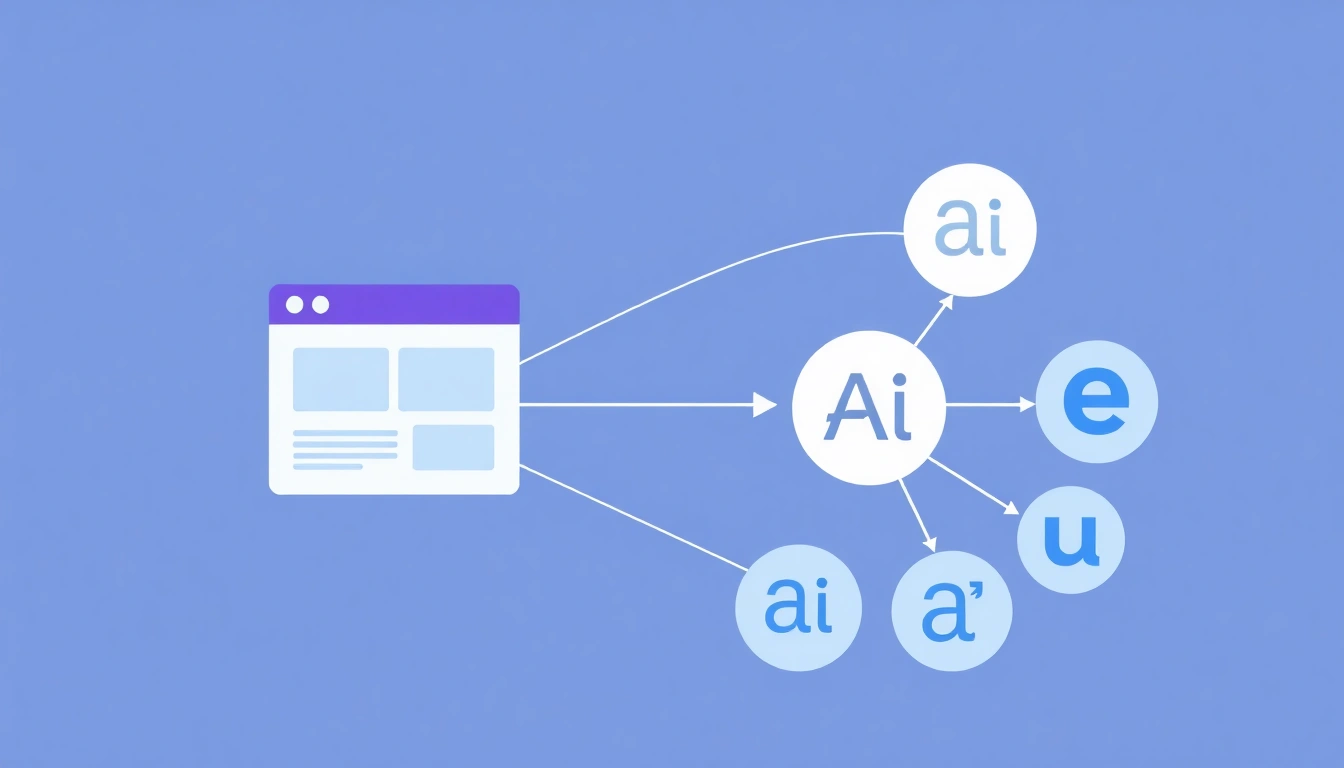
AI engines do not read your blog post the way a human does. They decompose a user's complex query into a set of sub-questions, then retrieve the passage that best answers each sub-question independently. A query like "what is the best CRM for a 10-person SaaS team" gets broken into sub-questions about pricing, integrations, onboarding, and support. Each sub-question retrieves a separate passage from across the web. This decomposition model means a single paragraph in your post can be cited for one sub-question even if the rest of your article never ranks. Dense Passage Retrieval (DPR) achieves a 78-79% top-20 accuracy on the Natural Questions benchmark (emergentmind.com) and yields a 9%-19% absolute recall improvement over traditional BM25 keyword retrieval (emergentmind.com). The data is clear. Sub-question decomposition is the starting point of AI citation, not an edge case.
What Makes a Passage Score High for AI Citation
Once a passage is retrieved, it enters a re-ranking stage where AI engines evaluate it against several criteria before deciding to quote it. The passage is embedded into a vector space as a dense numerical representation of its meaning, not its keywords. Two passages can use completely different words and still score as semantically equivalent if they describe the same concept. This semantic embedding process is why traditional keyword-stuffing fails in AI retrieval: a passage loaded with your target keyword but lacking conceptual completeness will lose to a shorter, cleaner passage that answers the implied question directly. Adding intent-encoding control tokens to query-document pairs boosts retrieval accuracy and reduces hallucination in downstream RAG systems by 13% (emergentmind.com). A high-scoring passage opens with a 20-25-word direct answer, contains three or more named entities (institution names, dollar figures, regulation names), reads as complete without surrounding context, and uses factual language rather than hedged or promotional phrasing. The optimal token range for AI extraction sits between 256 and 512 tokens with 10-20% overlap, validated across multiple 2026 benchmarks (aiagentsbuzz.com).
Why Passage-Level Relevance Matters for Your Blog
Page-level authority gets a page into consideration. Passage-level usefulness determines citation. This distinction changes everything about how you should structure content. Traditional SEO rewards whole-page signals: backlink count, domain rating, dwell time. AI citation rewards information density at the paragraph level, regardless of domain authority. A single well-structured paragraph on a low-authority domain can outcompete a vague, padded section on a Forbes-level domain inside a Perplexity answer. The evidence is substantial: 44.2% of all LLM citations come from the first 30% of page content (machinerelations.ai), meaning your opening passages carry disproportionate weight. Pages with strict heading hierarchy are cited in 68.7% of AI-cited results versus roughly 40% of uncited pages (machinerelations.ai). Structural optimization alone, with no content quality changes, produces a 17.3% improvement in citation rates according to University of Tokyo GEO-SFE research from March 2026 (machinerelations.ai). Passage-level relevance is now the decisive variable.
How Passage-Level Relevance Differs from Traditional SEO
Traditional SEO optimizes the whole page for a target keyword. Generative engine optimization optimizes each individual passage for a specific sub-question. Page-level metrics like bounce rate and time-on-page do not influence AI citation selection. Passage information density does. A blog post optimized only for traditional SEO may rank on page one of Google while remaining completely invisible to AI-generated answers. Consider the comparison below.
| Dimension | Traditional SEO | Passage-Level GEO |
|---|---|---|
| Unit of optimization | Full page | Individual paragraph |
| Key signal | Backlinks, domain authority | Information density, entity count |
| Keyword strategy | Target keyword frequency | Semantic completeness |
| Heading format | Keyword-rich, declarative | Answer-first, question-shaped |
| Citation by AI engines | Indirect, page-level ranking | Direct, passage extraction |
| Impact of domain authority | High | Moderate |
| Ideal passage length | No standard | 256-512 tokens |
GEO and traditional SEO are complementary but require distinct structural choices. An AI Overview now appears on 48% of all Google search queries (thestacc.com). Ignoring passage-level structure means surrendering half of Google's real estate to competitors who write for it.
Examples of Passage-Level Relevance in Practice
Theory is useful. Real examples are better. Consider a dental practice in Austin that restructures its blog to open every section with a direct clinical answer citing the CDC or American Dental Association by name, followed by a specific statistic. When a patient in Austin searches Perplexity for "how often should I get a dental cleaning," Perplexity's RAG pipeline chunks that dental blog into passages, embeds each one, scores them against the query, and surfaces the passage that answers most directly. The dental practice earns a citation impression before the patient ever visits a competitor's website. The same pattern works in B2B. A SaaS company that structures each product comparison H2 as a self-contained question-and-answer block earns citations in ChatGPT when buyers ask for software comparisons, even if the SaaS company's domain authority is a fraction of larger review sites. A law firm that publishes definition posts with 40-to-60-word standalone opening answers gets pulled into Google AI Overviews for legal term queries, generating brand awareness at the top of the funnel. Roughly 80% of RAG failures trace back to the ingestion and chunking layer, not the language model itself (aiagentsbuzz.com). Writing well is not enough. The passage must be structurally ready for extraction. AI-referred sessions are up 527% year over year (thedigitalbloom.com), and that number belongs to brands that understood passage-level relevance early. At Heyzeva, we engineer every blog post so the opening answer, each H2 section, and every FAQ response independently meets passage-level extraction thresholds. That is not an add-on. It is the architecture.
Frequently Asked Questions
What is the ideal length for a passage to be cited by an AI engine?
Does my domain authority affect whether AI engines cite my passages?
How is passage-level relevance different from keyword relevance?
Can I restructure existing blog posts to improve their passage-level relevance?
Which AI engines use passage-level relevance when generating answers?
How is passage-level relevance measured by AI search engines?
What makes a passage easy for an AI engine to quote?
How does passage ranking differ from page-level ranking?
Can structured formatting improve a passage's citation chances?
How can I optimize existing content for passage-level relevance?
Sources & References
- Dense Passage Retrieval (DPR) - Emergent Mind (opens in a new tab)[industry]
- What Structural Changes Help Content Get Cited by AI - Machine Relations (opens in a new tab)[industry]
- Google AI Overview Statistics 2026: 48% of Searches - The Stacc (opens in a new tab)[industry]
- How Marketers Are Increasing GEO Traffic in 2026 [Data Report] - The Digital Bloom (opens in a new tab)[industry]
- RAG Chunking Strategies: The Visual Guide (2026 Benchmarks) (opens in a new tab)[industry]
About the Author
Heyzeva
AI visibility content automation platform that creates and publishes content optimized for discovery by generative AI engines like ChatGPT, Perplexity, and Google AI Overviews.
Learn more at heyzeva.com → (opens in a new tab)Related Posts
What Is Keyword Cannibalization and How Does It Hurt AI Engine Citations?
Keyword cannibalization happens when multiple pages on your site compete for the same query, diluting your topical authority. For AI engines like ChatGPT and Google AI Overviews, this fragmentation is particularly damaging — they need a single, authoritative passage to cite. Learn what it is and how to fix it.
6 min read
What Is Query-to-Content Alignment? How AI Engines Match Sources to User Questions
Query-to-content alignment is the degree to which a piece of content directly answers the specific question a user asked an AI engine. Unlike traditional keyword matching, AI engines evaluate structural fit, semantic relevance, and answer completeness before citing a source. Understanding this concept is essential for any brand that wants to show up in AI-generated answers.
7 min read
What Is Cite-Worthiness and How Do AI Engines Decide If Your Blog Earns a Reference?
Cite-worthiness is the measurable quality that determines whether AI engines like ChatGPT, Perplexity, and Google AI Overviews pull your content as a trusted source. Most blogs optimized for traditional SEO fail this test entirely. Here is what actually earns a reference.
7 min read