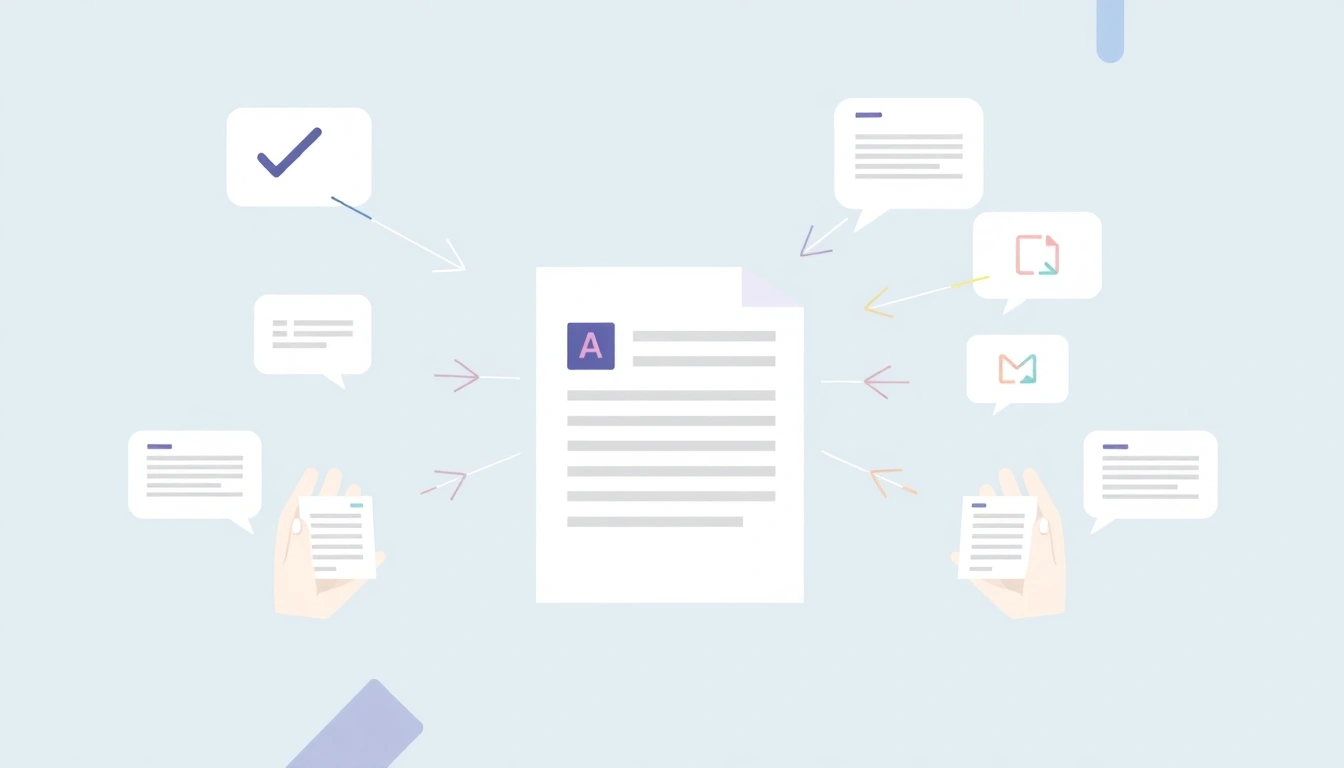
Source freshness decay is the gradual reduction in an AI engine's confidence score assigned to a piece of content as its publication date recedes, its factual signals go unconfirmed, and inbound citation links stagnate. AI engines like ChatGPT, Perplexity, and Google AI Overviews weight recency alongside authority, penalizing content that shows no update signals within roughly 6 to 18 months.
How Source Freshness Decay Works Inside AI Engines
AI engines do not treat all content equally. They assign a temporal confidence score that blends publication date, last-modified signals, crawl frequency, and inbound citation velocity. When any of those signals stagnate, the confidence score slides. The decay curve is not linear. Content typically holds strong citation probability for the first 6 months, loses moderate weight between months 6 and 18, and drops sharply after 24 months without meaningful update signals. Research confirms the pattern: AI-cited content averages 1,064 days old, compared to 1,432 days for traditionally-ranked content, a 368-day freshness gap that separates what gets cited from what merely ranks (getfancy.ai). AI bot traffic reinforces this: 90% of AI bot hits land on content less than three years old (getfancy.ai).
The citation likelihood formula that most practitioners quietly ignore looks like this: Citation Likelihood = Relevance x Authority x Accuracy x Currentness. Remove any factor and the product collapses. A technically authoritative post on HIPAA compliance from 18 months ago fails the Currentness term, and no amount of domain authority rescues it once newer regulatory guidance exists. This is why freshness decay is a systemic risk, not an edge case.
Google's retrieval pipeline starts with on the order of tens of thousands of documents from the index, then scores down to several hundred documents before final ranking (hobo-web.co.uk). Google's QDF (Query Deserves Freshness) algorithm applies freshness filters as a weighting signal across an estimated several hundred signals in total (hobo-web.co.uk). Perplexity runs real-time crawls and surfaces sources that demonstrate active update patterns. Neither engine publishes its exact decay curve, but the behavioral pattern is measurable: pages updated within the last 3 months average 6.0 ChatGPT citations versus 3.6 for stale equivalents, a 67% lift from refreshing publication date and core stats (getfancy.ai).
What Signals Do AI Engines Use to Measure Content Age?
AI engines read freshness from a layered signal stack. Primary signals include the HTTP Last-Modified header, schema.org datePublished and dateModified fields, and the sitemap lastmod tag. These are machine-readable and directly parsed by crawlers. Secondary signals include crawl frequency assigned by the bot, rate of new inbound links, and social share timestamps. Tertiary signals include internal link anchor text referencing the content, structured FAQ schema presence, and author credential recency.
Missing or mismatched date signals force engines to default to crawl date, which may be significantly later than actual publication and throws off every downstream freshness calculation. Schema.org adoption reached 51% of web pages as of 2024 (presenc.ai), but adoption alone is not enough. Schema must be accurate and updated. AI Overview citations run 3.1x higher on schema-valid pages (presenc.ai), and FAQPage schema specifically generates a 3.4x citation lift in AI Overviews and Perplexity (presenc.ai). Structured data with a stale dateModified field actively works against you, telling the engine the content has not been touched.
Which Content Types Decay Fastest?
Not all content decays at the same rate. Query volatility determines the decay velocity for each category. Pricing pages, software feature lists, and regulatory compliance guides carry the highest decay velocity because factual inaccuracy risk rises sharply with age. These categories may need review every few weeks or months (planconversion.com). A SaaS pricing comparison that is six months out of date will be displaced almost immediately when a newer source updates the figures.
Market statistics posts citing specific year-stamped data decay within 12 months as newer annual reports displace them. Local business content, including hours, service areas, and staff bios, decays at an accelerated rate because AI engines cross-reference against real-time sources like Google Business Profile and map listings. Evergreen definitions and how-to frameworks decay slowest. Reported observations suggest that cited pages can still be roughly three years old on average in this content category, provided they carry periodic schema updates and new inbound citations (planconversion.com).
The contradiction risk is real and underexplored. When an AI engine encounters an older claim about, say, a software integration feature, alongside a newer source that describes a changed workflow, it does not simply ignore the older source. It weighs both, but routes citations toward the more recently confirmed claim. The older page does not disappear immediately. It loses confidence weight incrementally until the engine treats it as contradicted rather than authoritative.
| Content Category | Estimated Decay Velocity | Recommended Refresh Cycle |
|---|---|---|
| Pricing and packaging pages | Very fast (weeks to 3 months) | Monthly or trigger-based |
| Software feature lists | Fast (3 to 6 months) | Quarterly |
| Regulatory compliance guides | Fast (3 to 6 months) | At every regulatory update |
| Market statistics posts | Moderate (6 to 12 months) | Annual with new data |
| Local business content | Moderate to fast (3 to 6 months) | Quarterly minimum |
| SEO and GEO glossary definitions | Slow (12 to 24 months) | Annual schema refresh |
| Evergreen how-to frameworks | Slow (18 to 36 months) | Biannual with new examples |
Why Source Freshness Decay Matters for Your GEO Strategy
The visibility risk is hidden. A content asset can hold its traditional SERP ranking while simultaneously dropping out of AI-generated answer sets. These are two separate systems with partially overlapping but distinct ranking criteria. Only 38% of AI Overview citations come from top-10 organic pages (discoveredlabs.com), meaning your best-ranking SEO content is not automatically your best-performing GEO content. AI citation visibility operates on its own decay schedule.
The business stakes are significant. As of 2025, 94% of B2B buyers use LLMs in their purchasing process (getgangly.com), and 95% of winning vendors were on the buyer's day-one shortlist (getgangly.com). That shortlist is now partly constructed by AI-generated answers. If your content has decayed out of citation eligibility, you are absent from the shortlist formation stage. The data is clear: 96% of B2B companies fail to appear in AI discovery at all (discoveredlabs.com). Freshness decay is a primary driver of that invisibility.
AI-cited content runs 25.7% fresher than organic SERPs on average (digitalapplied.com). That gap is the competitive terrain. Brands that publish content engineered for GEO from the start, with proper schema, update cadences, and citation-ready structure, compound authority while competitors decay out of AI answer sets. At Heyzeva, we build dateModified schema embedding, update workflow triggers, and inbound citation signal maintenance directly into the content production pipeline so that freshness decay is managed continuously, not reactively.
How to Slow or Reverse Source Freshness Decay
The most important distinction is between substantive updates and cosmetic ones. Changing a publish date without changing the content does not reset the freshness clock in any meaningful way. AI engines parse the actual content, compare it against indexed alternatives, and assess whether the factual claims have been confirmed or superseded. The strongest defense is to refresh underlying claims, dates, data, examples, and references rather than performing cosmetic date changes that leave the substance unchanged.
A concrete update playbook for a SaaS marketing team looks like this: take a pricing comparison post that was published 11 months ago, replace any year-stamped statistics with current figures, add a new competitor column reflecting a product launched in the last quarter, update the schema.org dateModified field, add an explicit 'Last updated: November 2026' label above the fold, and publish two new internal links pointing to it from recently published posts. That sequence hits every signal layer: schema freshness, factual currency, inbound citation velocity, and crawl triggers. The result is a content asset that re-enters the AI citation eligibility window rather than continuing its decay trajectory.
Three in four cited pages were updated in the last year (seerinteractive.com). That benchmark sets the minimum cadence. For high-velocity categories like pricing and compliance, quarterly updates are more appropriate. For evergreen glossary content, an annual schema refresh combined with new inbound links from recently published posts is sufficient to hold citation placement.
Real-World Scenarios: Source Freshness Decay in Action
Concrete examples reveal what abstract decay curves mean in practice. Consider a SaaS company that publishes a detailed pricing comparison post in Q1 2024. By Q3 2025, three competitor pricing changes go unupdated in that post. The content now contains confirmed factual inaccuracies relative to live pricing pages. Perplexity, which runs real-time crawls, stops citing the post and routes users to a newer comparison page instead. The original post still ranks organically. The GEO visibility is gone.
A law firm publishes a thorough HIPAA content marketing guide in mid-2024. After 18 months without updates, newer OCR guidance documents are indexed and confirmed by multiple citing sources. ChatGPT begins routing compliance questions to those documents. The firm's post drops from AI-generated answer sets without any manual intervention from the engine. This matters. The firm loses citation placement not because the original content was wrong, but because the AI engine's confidence score shifted toward more recently confirmed sources.
Compare that to a marketing agency that refreshes a client's cornerstone SEO glossary post every 9 months, adding new GEO-specific terms, updating internal links, and refreshing schema dateModified fields each cycle. That post retains citation placement in Perplexity answer sets across multiple consecutive years. The pattern is consistent: content that receives structured, documented updates maintains citation eligibility while static content decays out of AI answer sets regardless of its original quality. Results speak louder. Freshness is a compound advantage, not a one-time optimization.
Frequently Asked Questions
How long does it take for content to start experiencing source freshness decay in AI engines?
Does updating a blog post's publish date without changing the content fool AI engines into treating it as fresh?
Is source freshness decay the same across ChatGPT, Perplexity, and Google AI Overviews, or does each engine weight it differently?
What is the minimum update needed to reset the freshness clock on a piece of content?
Can a high-authority domain slow freshness decay for older content on its site?
How does source freshness decay affect local business content differently than B2B blog content?
How is source freshness decay measured across different content types?
What signals indicate that an AI engine considers a page outdated?
How often should different types of content be refreshed?
Can updating old content restore its visibility in AI citations?
Sources & References
- Content Refresh Prioritization: 2026 SEO Decision Matrix - Digital Applied (opens in a new tab)[industry]
- Why Fresh Content Beats Authority: The Recency Bias in AI Citations - Visigent Research (opens in a new tab)[industry]
- B2B Buyer Behavior Statistics 2026 - Gangly (opens in a new tab)[industry]
- Study: Content Recency's Impact on AI Visibility in 2026 - Seer Interactive (opens in a new tab)[industry]
- State of Schema.org for AI Search 2026 - Presenc AI (opens in a new tab)[industry]
- AI Visibility Statistics 2026 - Discovered Labs (opens in a new tab)[industry]
- Content Freshness in AI Search for B2B - Plan Conversion (opens in a new tab)[industry]
- The Freshness Signal: QDF (Query Deserves Freshness) - Hobo (opens in a new tab)[industry]
About the Author
Heyzeva
AI visibility content automation platform that creates and publishes content optimized for discovery by generative AI engines like ChatGPT, Perplexity, and Google AI Overviews.
Learn more at heyzeva.com → (opens in a new tab)Related Posts

What Is Authoritative Sourcing and How Do AI Engines Decide Which Blogs Count as Primary Sources?
Authoritative sourcing is the process by which AI engines like ChatGPT, Perplexity, and Google AI Overviews evaluate and select which content to cite as a trusted primary source. Most blogs never get cited because they optimize for clicks, not AI legibility. Understanding these selection criteria is the first step to earning consistent AI engine visibility.
9 min read
What Is Brand Voice Consistency and How Do AI Engines Use It to Decide Whether to Cite Your Blog?
Brand voice consistency is more than a style preference — it signals editorial authority to AI engines like ChatGPT, Perplexity, and Google AI Overviews. Posts that maintain a stable, recognizable voice across a domain train AI systems to treat that source as reliable. This post explains what that means and what to do about it.
8 min read
5 Best AI Content Automation Platforms for Local Businesses That Want AI Engine Visibility
AI engines like ChatGPT and Google AI Overviews are replacing traditional search as the first stop for local discovery. The platforms on this list are built to help local businesses get cited in those AI-generated answers, not just rank on page one of Google.
14 min read