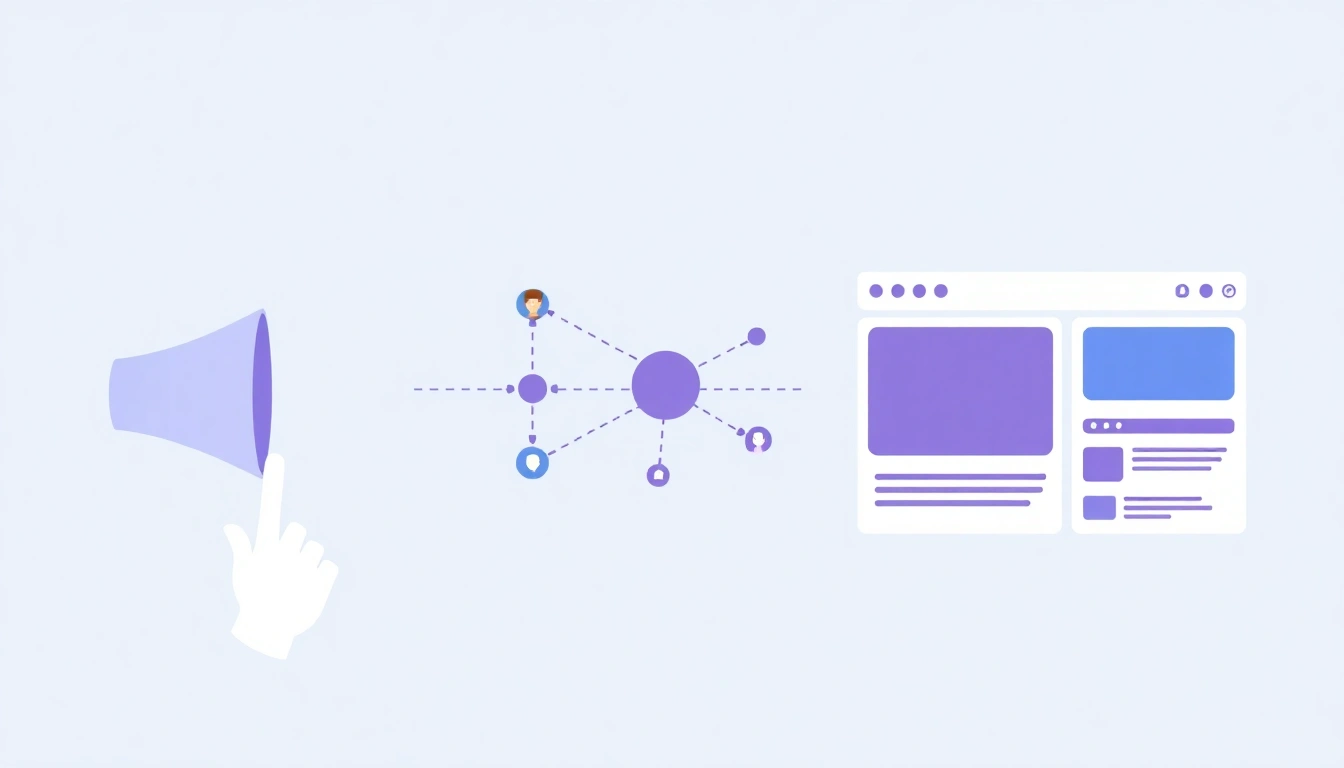
Query-to-content alignment is how closely a piece of content matches the intent, structure, and specificity of a user's question. AI engines like ChatGPT, Perplexity, and Google AI Overviews evaluate this fit by scanning for direct answers, factual entities, and question-first headings, then cite the sources that best satisfy the query.
How AI Engines Evaluate Query-to-Content Alignment
AI engines do not read pages the way humans do. They decompose a user's query into semantic vectors, then retrieve passages that score highest on topical completeness, structural clarity, and factual density. Google AI Overviews now appear in over 60% of all searches as of 2025, up from just 25% in mid-2024 (mikekhorev.com). Each summary contains about 169 words and 7.2 links on average (mikekhorev.com), meaning your content competes for a small number of citation slots. The evaluation system considers topical depth, specificity, evidence quality, freshness, domain authority, and agreement with other credible sources. A single post that scores highly on all six dimensions is far more likely to be cited than a longer, older post that only matches on keyword frequency.
Critically, retrieval systems pull several sections from multiple pages rather than selecting one page because it ranks for an exact phrase. This passage-level extraction means your content library functions as a distributed citation network. Each H2 section can be pulled independently, so a 150-word block answering a narrow sub-question on your pricing page can be cited separately from your main blog post. This is a structural shift in how content earns visibility. Publish self-contained passages, not essays that only make sense read top to bottom.
Answer-First Structure and AI Passage Retrieval
AI engines use retrieval-augmented generation (RAG) architectures that surface the top-scoring passage for each query component, not the highest-ranked page overall. Under this model, content that opens with a crisp declarative answer within the first 50-75 words scores measurably higher on alignment than content that buries the answer below introductory paragraphs. Complex queries are also divided into related sub-questions covering features, comparisons, limitations, price, and implementation details, so a post that answers only the top-level question leaves alignment gaps that a competitor's more complete post will fill. At Heyzeva, we structure every generated post with an opening answer block designed specifically to satisfy this passage-retrieval pattern used by ChatGPT, Perplexity, and Google AI Overviews. The difference between a cited post and an invisible one is often whether the answer appears in sentence one or sentence ten.
Semantic Signals Versus Traditional Keyword Matching
Traditional SEO asks whether a page contains a keyword. Query-to-content alignment asks whether the page resolves the user's question. These are fundamentally different evaluation frameworks. Traditional ranking rewards exact-match keyword frequency and backlink volume. AI engines instead use transformer-based embedding models to measure how well the full content vector aligns with the query vector. A post about GEO content strategy that never uses the phrase "Generative Engine Optimization" can still appear in AI-generated answers if it covers the concept thoroughly with specific examples and named entities. Research shows that content with added statistics and quotations achieved 30-40% higher visibility in AI-generated responses compared to unmodified content (aisearch.similarweb.com). Entity density, specific institution names, dollar figures, and product names signal factual authority to language models. Topical completeness, not keyword repetition, is the currency of AI citation.
Why Query-to-Content Alignment Matters for Brand Visibility
AI engines are replacing the first page of search results as the primary discovery layer. 94% of B2B buyers used AI during their most recent purchase process, with 55% comparing vendors, 54% researching products, and 47% building internal business cases before any vendor contact (machinerelations.ai). This is not a future trend. It is current buyer behavior. B2B companies are already reporting website traffic declines of 10-40% as buyers migrate research activity into AI answer engines (machinerelations.ai). The brand cited in an AI-generated answer earns zero-click authority: the buyer sees the name and trusts it without visiting the site, compounding credibility with every subsequent query.
The competitive stakes are high. 41% of brands that dominate Google search are underrepresented in ChatGPT and Perplexity (www.muratulusoy.de), and the correlation between classical Google ranking position and AI citation rate is only 0.42 (www.muratulusoy.de), meaning strong SEO is a weak predictor of AI visibility. Conversely, cited pages gain 35% more organic clicks and 91% more paid clicks compared to non-cited competitors (mikekhorev.com). Content optimized only for traditional SEO mechanics is structurally invisible to AI citation systems. The window to build GEO-aligned content libraries before competitors claim AI-answer real estate is open right now. It will not stay open.
How GEO Differs from SEO on Alignment
GEO alignment and SEO alignment are not the same goal pursued by different tactics. They are different evaluation criteria entirely. SEO alignment is about matching keywords and earning backlinks from authoritative domains. GEO alignment is about matching the question's intent with a structurally extractable, factually dense, self-contained answer. Google's traditional PageRank algorithm rewards domain authority accumulated over years. AI engines can cite a recently published post from a smaller domain if its content alignment score outperforms an older competitor's post. Brand web mentions show a correlation of 0.664 with AI citation frequency, the highest correlation of any single variable measured in a 2026 study covering 80 million citations and 10,000 domains (astiva.ai), and earned media accounted for 84% of citations across ChatGPT, Claude, and Gemini (astiva.ai). Visibility compounds. Early movers who achieve high alignment across a content library are cited more often, which increases brand mentions, which further raises citation probability.
Real-World Examples of Query-to-Content Alignment in Action
Cross-industry patterns make the alignment principle concrete. A law firm publishing a post titled "What Is a Contingency Fee?" with a 50-word direct definition in the opening paragraph is more likely to be cited by Perplexity than a competing post that buries the same definition in paragraph four. The content of both posts may be identical, but structural placement determines citation eligibility. A SaaS company whose pricing page includes a structured FAQ block answering "How much does [product] cost per user?" in the first sentence will appear in ChatGPT answers for cost-comparison queries, while a competitor whose pricing page uses vague range language will not. A real estate agent whose blog post answers "What is the average home price in [city]?" with a specific dollar figure, an inline source citation, and market context will dominate local AI-generated answers for that query over a competitor who publishes a general market update with no structured data.
Pages combining text, images, video, and schema markup show a 317% better selection rate in AI-generated results compared to text-only pages (mikekhorev.com). Consider a home services company that publishes a blog post on "How much does HVAC replacement cost in [city]?" with a structured FAQ, a comparison table of equipment tiers and price ranges, and a cited local average. That single post can be cited by multiple AI engines for multiple related queries simultaneously, because each section resolves a different sub-question independently. Heyzeva's AI-powered blog automation platform applies query-to-content alignment principles automatically, structuring each post with question-form headings, opening answer blocks, and entity-rich passages calibrated for citation by ChatGPT, Perplexity, Google AI Overviews, Claude, and Gemini.
AI Citation Signals at a Glance
The table below summarizes how traditional SEO signals and query-to-content alignment signals differ in the context of AI engine citation.
| Signal | Traditional SEO | Query-to-Content Alignment (GEO) |
|---|---|---|
| Primary matching method | Keyword frequency and density | Semantic embedding vector similarity |
| Answer placement | Anywhere in the page | First 50-75 words of a section |
| Authority source | Backlinks from high-DA domains | Entity density, earned media, brand mentions |
| Content unit evaluated | Entire page | Individual 134-167 word passages |
| Freshness weight | Moderate | High for factual/statistical claims |
| Structured data value | Moderate (rich snippets) | High (schema aids passage extraction) |
| New site disadvantage | High (years to build authority) | Lower (alignment can outperform incumbents) |
Frequently Asked Questions
What is the difference between query-to-content alignment and traditional keyword optimization?
How do I know if my blog posts have strong query-to-content alignment for AI engines?
Which AI engines use query-to-content alignment to select cited sources?
Can a new blog post outrank established sites in AI-generated answers through better alignment?
How does Heyzeva structure content for query-to-content alignment automatically?
How do AI engines evaluate semantic relevance between a query and blog content?
What content structures improve visibility in AI-generated answers?
How can I optimize blog posts for conversational and zero-click searches?
What role do entities, context, and search intent play in content matching?
How can I measure whether my content is being cited by AI engines?
Sources & References
- Entity Correlation in AI Search | Brand Mentions | Astiva AI (opens in a new tab)[industry]
- 94% of B2B Buyers Use AI for Vendor Research | MR Research (opens in a new tab)[industry]
- Generative Engine Optimization: The Complete 2026 Guide | Similarweb (opens in a new tab)[industry]
- State of AI Search 2026 - Research Report · Murat Ulusoy (opens in a new tab)[industry]
- Google AI Overview: New Ranking Signals That Matter in 2026 (opens in a new tab)[industry]
About the Author
Heyzeva
AI visibility content automation platform that creates and publishes content optimized for discovery by generative AI engines like ChatGPT, Perplexity, and Google AI Overviews.
Learn more at heyzeva.com → (opens in a new tab)Related Posts
What Is Keyword Cannibalization and How Does It Hurt AI Engine Citations?
Keyword cannibalization happens when multiple pages on your site compete for the same query, diluting your topical authority. For AI engines like ChatGPT and Google AI Overviews, this fragmentation is particularly damaging — they need a single, authoritative passage to cite. Learn what it is and how to fix it.
6 min read
What Is Cite-Worthiness and How Do AI Engines Decide If Your Blog Earns a Reference?
Cite-worthiness is the measurable quality that determines whether AI engines like ChatGPT, Perplexity, and Google AI Overviews pull your content as a trusted source. Most blogs optimized for traditional SEO fail this test entirely. Here is what actually earns a reference.
7 min read
What Is Temporal Relevance and How Do AI Engines Use It to Decide If Your Content Is Worth Citing?
Temporal relevance is a core signal AI engines use to decide which content is fresh enough to trust and cite. If your content looks outdated, AI systems like ChatGPT, Perplexity, and Google AI Overviews will pass it over for newer sources. This post defines the concept and shows what it means for your content strategy.
8 min read