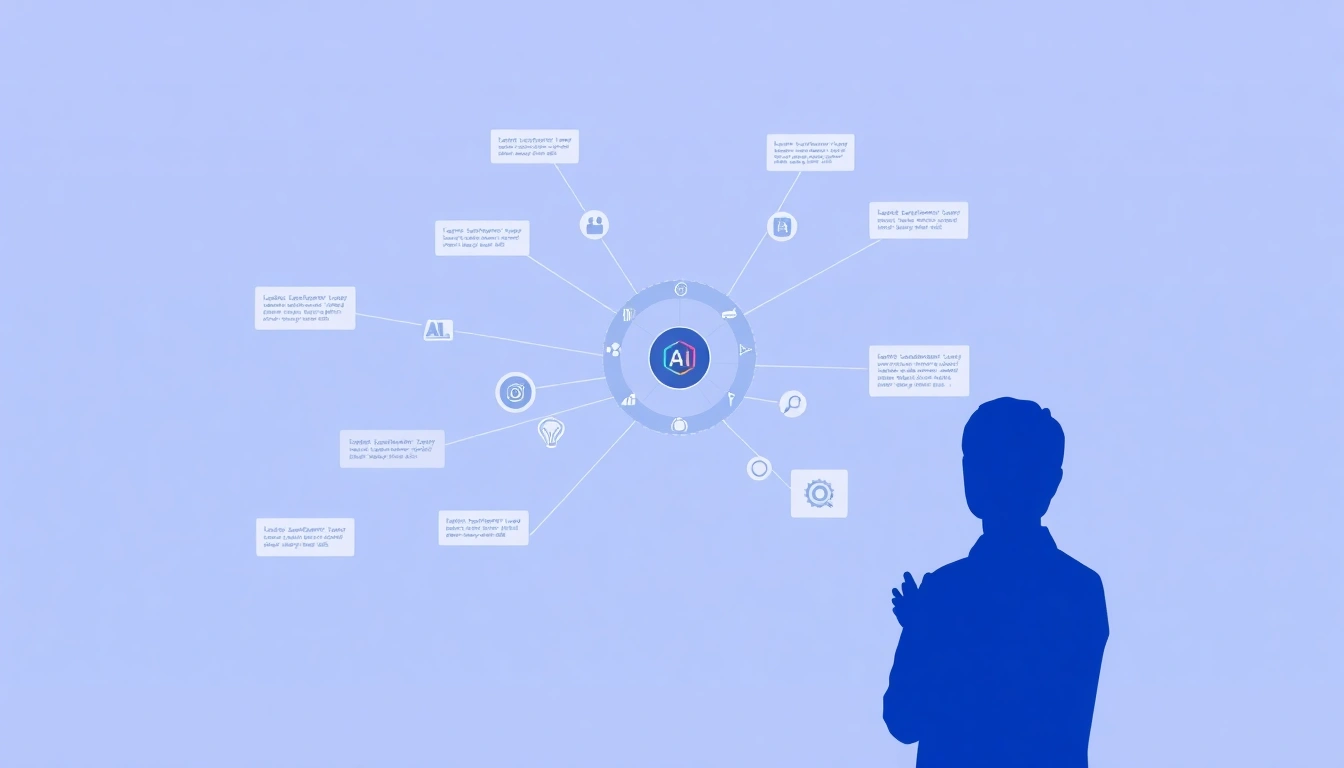
Lexical overlap is the degree of shared vocabulary between a user's query and a piece of content. AI engines measure this overlap to assess relevance before deciding which sources to cite in generated answers. Higher overlap, combined with answer-first structure and factual density, significantly increases a page's probability of being cited by ChatGPT, Perplexity, or Google AI Overviews.
How Lexical Overlap Actually Works in AI Retrieval
AI engines that power ChatGPT, Perplexity, and Google AI Overviews do not read every document on the web before generating an answer. They rely on a two-stage pipeline: a fast retrieval stage followed by a slower re-ranking stage. Lexical overlap is the primary fuel for the first stage. Algorithms like BM25 and TF-IDF score each candidate document by counting how often query terms appear, how early they appear, and whether they appear in headings versus body text. BM25 scores approximately 0.58 NDCG@10 on mixed-query benchmarks, while dense vector search reaches 0.72 NDCG@10, and hybrid systems that combine both improve NDCG by 26-31% over dense-only retrieval (atlan.com). The practical consequence is direct: a page that does not match the query's vocabulary at the lexical stage rarely enters the re-ranking pool at all, regardless of how conceptually rich its content is. Retrieval must happen before quality is ever evaluated.
Exact terminology carries outsized weight for names, product terms, technical concepts, and uncommon phrases. These low-frequency tokens receive high inverse-document-frequency scores in TF-IDF, meaning a page that uses the precise phrase "retrieval augmented generation" will outscore a page that paraphrases the concept as "AI pulling from external documents" on a query that uses the exact term. This dynamic is especially important for GEO content strategy: the exact phrasing your target buyer types into Perplexity is a retrieval signal you can engineer for, not just a stylistic choice.
What Is the Difference Between Lexical and Semantic Matching?
Lexical matching compares exact strings of text using term-frequency algorithms. Semantic matching compares meaning using dense vector embeddings that represent concepts in high-dimensional space. AI engines run lexical matching first because it is computationally cheaper and fast enough to filter millions of documents in milliseconds. A 2026 study analyzing 602 prompts and 21,143 citations across ChatGPT, Google AI Overview, and Perplexity confirmed that dense retrieval alone achieves 75.4% Top-1 accuracy on open-domain question answering versus BM25's 54.0%, but hybrid pipelines push recall@1,000 from roughly 0.87 to 0.98 (atlan.com). Semantic matching then re-ranks the shortlisted documents by conceptual relevance, factual verifiability, and author expertise signals. A page with poor lexical overlap rarely makes it into the semantic re-ranking pool at all. Repeating a query's exact phrasing in your H1, opening paragraph, and at least one H2 heading is not keyword stuffing. It is retrieval engineering.
Why Lexical Overlap Matters for AI Engine Citation
Being retrieved is not the same as being cited. This distinction matters enormously for anyone building a GEO content strategy. A 2026 analysis of 15,000 ChatGPT prompts found that ChatGPT retrieved 548,534 pages but cited only 15% of them in final responses (authoritytech.io). Lexical overlap gets your content into the candidate set. Citation depends on what happens next. A retrieved page earns a citation only when its content is used to support a specific claim in the AI-generated answer. Passage-level relevance, factual specificity, and structural extractability all determine whether a page crosses from "retrieved" to "cited."
Higher lexical overlap does not automatically mean more citations. Repeating keywords may improve retrieval scoring, but semantic relevance, factual specificity, source quality, and whether a passage directly supports the AI's sentence matter more in the re-ranking stage. An analysis of AI Overviews found that only 17% of sources AI Overviews cite also rank in the organic top 10, and 88% of Google AI Mode citations are not in the organic results for the exact query (authoritytech.io). These figures reveal that AI engines are selecting sources based on passage utility, not traditional domain authority. Structured content, such as Q&A blocks, definition passages, and numbered lists, amplifies lexical overlap benefits because it concentrates query-matching terms in scannable, extractable units that passage-selection algorithms can isolate cleanly.
Entity density compounds lexical overlap effects. Pages with 15 or more specific named entities alongside strong lexical overlap show substantially higher AI citation rates. Branded web mentions correlate with brand appearance in Google AI Overviews at 0.664, compared to 0.218 for backlinks and 0.326 for Domain Rating (authoritytech.io). The data is clear. Lexical precision and entity richness together outperform traditional SEO authority signals for AI citation.
How Marketers Can Increase Lexical Overlap Without Keyword Stuffing
The goal is deliberate term placement, not repetition for its own sake. Place the exact query phrase in your H1, in the first 50 words, and in at least one H2 heading. Write a 40-60 word opening answer that uses the query's core terms naturally within a standalone, factually complete response. Include morphological variants throughout body paragraphs: if the target term is "lexical overlap," also use "term overlap," "query-term matching," and "vocabulary alignment" to capture query expansion signals. Structural edits alone raised citation rates by 17.3% across six generative engines in controlled GEO tests (authoritytech.io). Avoid diluting high-overlap paragraphs with filler language. Every sentence in a passage should either add a fact or reinforce a term signal. At Heyzeva, we build this discipline into every post's architecture: target query mapped to H1, opening answer engineered to 40-60 words, question-form H2 headings that mirror user phrasing, and entity density checkpoints before publish.
Lexical Overlap in Practice: What This Means for GEO Strategy
Generative engine optimization treats lexical overlap as a foundational, engineerable signal rather than an organic byproduct of good writing. The practical checklist is short: query phrase in H1, query phrase in opening paragraph, question-form H2 that mirrors query intent, 15 or more named entities per post, and FAQ sections built from verbatim user questions. Large language models hallucinate from 69% to 88% (web.stanford.edu) of the time when asked questions in specialized domains, according to Dahl et al. (2024) (web.stanford.edu). This means AI engines actively prefer sources with precise, verifiable language over vague authority content, because precision reduces hallucination risk at the generation stage.
Consider a concrete scenario. A dentist in Austin who publishes a post titled "Best Dentist in Austin for Same-Day Crowns" will out-cite a generic dental authority page on the exact query "best dentist in Austin for same-day crowns" because the lexical overlap is exact and the passage is extractable as a standalone answer. The generic page may have more backlinks. It loses on retrieval anyway. This is the core insight that separates GEO from traditional SEO.
SaaS and B2B content teams should map their content to the exact phrasing found in sales call recordings, G2 reviews, and Reddit threads. These sources are verbatim proxy signals for query phrasing. A search for how buyers describe your product in their own words is a retrieval engineering exercise. Match their vocabulary, and your content enters the candidate set. Agencies managing multiple clients can systemize lexical overlap scoring as a quality gate: confirm the target query phrase appears in the H1, the opening passage, and at least one H2 before any post publishes. Perplexity visits approximately 10 web pages per query before selecting which to cite (machinerelations.ai). Your content needs to be in those 10.
FAQ schema markup amplifies the effect. It tells AI engines exactly which passage answers which question, reducing the interpretive work required at the re-ranking stage. Every structured signal you add is a retrieval advantage that unstructured content cannot match. Results speak louder. Build for retrieval first.
Frequently Asked Questions
Is lexical overlap the same as keyword density?
Do AI engines like ChatGPT use lexical overlap or only semantic understanding to pick sources?
How much lexical overlap is enough for a page to be cited by Google AI Overviews?
Does lexical overlap matter more for local business content than for B2B SaaS content?
Can I measure lexical overlap between my content and a target query before publishing?
How is lexical overlap measured between a user query and a source?
Does higher lexical overlap always increase a source's citation chances?
How does lexical overlap differ from semantic similarity in AI search?
What other signals besides lexical overlap influence AI citations?
How can publishers improve lexical overlap without keyword stuffing?
Sources & References
- Hybrid RAG: Dense and Sparse Retrieval for Better AI Answers (opens in a new tab)[industry]
- How Perplexity Selects Sources | MR Research (opens in a new tab)[industry]
- AI Platforms Like ChatGPT and Perplexity Decide What to Cite (opens in a new tab)[industry]
- Information Retrieval and Retrieval-Augmented Generation (opens in a new tab)[edu]
About the Author
Heyzeva
AI visibility content automation platform that creates and publishes content optimized for discovery by generative AI engines like ChatGPT, Perplexity, and Google AI Overviews.
Learn more at heyzeva.com → (opens in a new tab)Related Posts
What Is Keyword Cannibalization and How Does It Hurt AI Engine Citations?
Keyword cannibalization happens when multiple pages on your site compete for the same query, diluting your topical authority. For AI engines like ChatGPT and Google AI Overviews, this fragmentation is particularly damaging — they need a single, authoritative passage to cite. Learn what it is and how to fix it.
6 min read
What Is Query-to-Content Alignment? How AI Engines Match Sources to User Questions
Query-to-content alignment is the degree to which a piece of content directly answers the specific question a user asked an AI engine. Unlike traditional keyword matching, AI engines evaluate structural fit, semantic relevance, and answer completeness before citing a source. Understanding this concept is essential for any brand that wants to show up in AI-generated answers.
7 min read
What Is Cite-Worthiness and How Do AI Engines Decide If Your Blog Earns a Reference?
Cite-worthiness is the measurable quality that determines whether AI engines like ChatGPT, Perplexity, and Google AI Overviews pull your content as a trusted source. Most blogs optimized for traditional SEO fail this test entirely. Here is what actually earns a reference.
7 min read