How to Track AI Engine Citations: A Practical Framework for Monitoring ChatGPT, Perplexity, and Gemini References
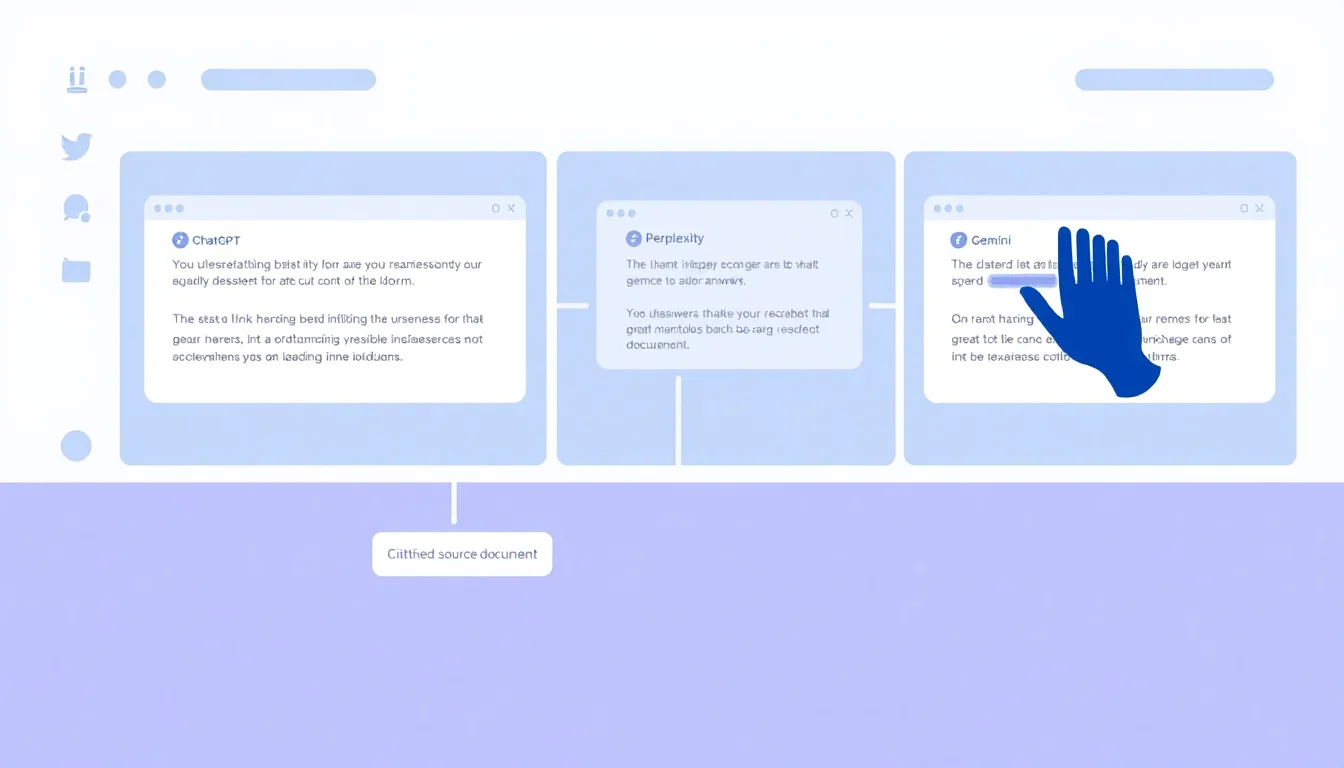
To track AI engine citations, run systematic prompt queries across ChatGPT, Perplexity, and Gemini. Use your brand name, product category, and competitor comparison terms. Log every mention in a shared tracker, capture source links Perplexity surfaces, and set weekly cadences to monitor trends. This manual-plus-tool approach gives you a measurable GEO baseline within 30 days.
Why Does AI Citation Tracking Matter for Modern Marketing?
AI engines have fundamentally changed how buyers discover vendors, and the business impact is concrete. A 2026 analysis found that 94% (machinerelations.ai) of B2B buyers used AI during their most recent purchase process. 55% compared vendors. 54% researched products. 47% built internal business cases. All of this happened before any vendor contact. That means buyers are forming shortlists inside ChatGPT and Perplexity before they ever visit your website. If your brand is not cited in those synthesized answers, you are invisible to nearly every modern B2B buyer. This happens at the moment they are most receptive to discovery. Citation is the new impression. Traditional Google Analytics and Search Console provide zero visibility into whether an AI engine is referencing your brand. This creates a dangerous blind spot. Your organic traffic metrics may look stable. Meanwhile, your AI engine visibility is dropping to zero. The gap between brands investing in generative engine optimization and those ignoring it is widening every week, and early movers are already claiming citation real estate that late arrivals will struggle to displace.
AI visibility depends on more than a single mention. It depends on presence, frequency, and context inside generated answers. Being named once as an afterthought in a five-option list carries far less authority signal. Being named consistently as the primary recommendation across multiple query variations and multiple AI engines carries much more. Brands that achieve consistent AI citation build a compounding authority loop: citations reinforce domain trust signals, which increase future citation probability. Brands that are absent from AI answers become progressively harder to discover as buyer behavior shifts further toward AI-first research.
How Is AI Citation Different from Traditional Backlink or Ranking Metrics?
A backlink passes PageRank through Google's algorithm. An AI citation passes perceived authority directly into a synthesized answer. A buyer reads it and acts on it immediately. No click-through to your site is required. The two mechanisms are structurally different. Rankings measure where your URL appears on a results page. AI citations measure whether your brand appears in the answer itself, as the source an AI engine trusts enough to surface to a user asking a real buying question. AI Overviews now appear on 48% of all search queries, reducing organic clicks by up to 58% (digitalapplied.com). For informational and comparison queries, where buyers are doing vendor research, the AI Overview rate moves toward 70-80% (digitalapplied.com). Critically, visitors who do click through from AI Overview-affected pages convert at 23x the rate of standard search visitors (digitalapplied.com). This is why AI citation tracking cannot be replicated with Ahrefs, SEMrush, or Search Console. Those tools were built for a world where ranking meant visibility. In the AI-first world, citation frequency across multiple engines is the metric that predicts pipeline.
Setting Up Your AI Citation Tracking System from Scratch
Building a citation tracking system from zero requires three foundational decisions: which queries to monitor, which engines to cover, and how to store and compare results over time. Get these wrong and your data is noisy and unusable. Get them right and you have a system that compounds in value with every weekly audit. Start by defining your core query list, then choose your engine coverage, then build your logging infrastructure before making any content changes, so you establish a clean baseline.
Building Your Core Query Library for AI Monitoring
Your query library is the foundation of everything. Without a well-structured set of prompts, you are sampling random noise rather than measuring GEO performance. Build a library of 20-40 queries organized across four categories. Brand queries include your company name, product name, and founder name. Category queries cover what your product does and the problem it solves. Use-case queries target specific scenarios your ideal customer searches for. Competitor comparison queries are structured as "[your category] vs [competitor]" or "best [tool] for [use case]". Include long-tail, conversational phrasing because AI engines respond to natural language prompts, not keyword strings. A query like "what is the best way to track AI engine citations for a B2B SaaS company" will surface different citation behavior. This differs from "AI citation tracking tool." For example, imagine a dental practice in Austin. They run queries like "best cosmetic dentist in Austin" and "teeth whitening near me" on Perplexity and Gemini. That gap becomes the practice's highest-priority content opportunity. They need to publish structured, locally-specific content about cosmetic procedures. Clear H2 headings and entity density are essential. This helps them compete for citations within 30-45 days. Add geo-specific queries if you serve local markets, such as "best dental practice in Austin" or "top real estate agent in Nashville," since local intent queries often yield faster citation wins than broad national category terms. Rotate query phrasing every 30 days, because AI engines respond differently to slight wording variations and you want to avoid false confidence from a single phrasing that happens to favor your brand.
Choosing the Right Tools to Scale AI Citation Monitoring
Manual tracking is viable for up to 50 queries per week. Run each query in a fresh, logged-out browser session to eliminate personalization bias. Perplexity is the most transparent engine for citation auditing because it surfaces clickable source URLs alongside every answer, making it straightforward to identify exactly which content earned the citation. ChatGPT, with 900 million weekly active users as of February 2026 (digitalapplied.com), does not consistently surface source URLs in its standard interface, requiring you to infer citation from context. Gemini reached 750 million monthly users (digitalapplied.com) and is deeply integrated into Google Search via AI Overviews, making it essential to monitor regardless of standalone app usage. For teams monitoring more than 50 queries weekly, browser automation tools like Playwright or Puppeteer can batch-query AI engines and log responses into a database. At Heyzeva, we have built our platform to close this gap: the GEO monitoring workflow goes from citation gap identification to published, AI-optimized content without requiring manual writing or separate tooling. Set Google Alerts for your brand name alongside AI monitoring to catch cases where AI engines cite third-party articles that reference your brand, since indirect citations also contribute to perceived authority.
| Engine | Source URL Visibility | Weekly Active Users | Primary Citation Format |
|---|---|---|---|
| Perplexity | High (clickable links shown) | Growing rapidly | Numbered source list |
| ChatGPT (GPT-4o) | Low (rarely surfaced) | 900M (digitalapplied.com) weekly | Inline brand mention |
| Google Gemini / AI Overviews | Medium (linked in Overview) | 750M monthly | Carousel with source links |
| Claude | Low | 8.2% gen-AI traffic share | Inline brand mention |
Running Weekly Citation Audits Across ChatGPT, Perplexity, and Gemini
A weekly citation audit is the operational heartbeat of any GEO program. Without consistent audit cadence, you cannot separate signal from noise or attribute citation changes to specific content actions. The audit is not just a presence check. It is a structured data collection exercise that feeds your content strategy, your competitive intelligence, and your GEO performance reporting simultaneously. Consistency matters more than sophistication. A simple shared Google Sheet run weekly outperforms a complex dashboard checked quarterly.
What Does a Standardized Weekly Citation Audit Look Like?
A standardized weekly audit across 30 core queries on three AI engines takes approximately 2-3 hours manually. Score each query on a 0-3 scale: 0 means not cited, 1 means mentioned in a list with no context, 2 means cited with descriptive context, and 3 means named as the primary recommendation. This scoring system transforms a binary yes/no presence check into a measure of citation depth, which is far more valuable for strategy. Record the full text of the AI-generated answer, not just your citation status. Screenshot or record the answer with a timestamp, since AI outputs change without notice and historical records are essential for trend analysis. Flag any new competitor citations that were not present in the prior week. Those flags are your highest-priority content production signals. Score each prompt across three dimensions beyond simple presence: frequency (how often you appear across similar query variations), source diversity (are you being cited from multiple content assets or just one), and sentiment or framing (are you cited as a best-in-class solution or buried with caveats). Use a shared Notion database or Google Sheet with dropdown fields to keep data consistent across team members.
How to Interpret Citation Data and Identify Content Gaps
Citation data becomes strategy when you act on the gaps, not just celebrate the wins. Queries where competitors are cited and you are absent represent your highest-priority content production opportunities. These gaps are not random. They signal that an AI engine has evaluated the available content on a topic and found a competitor's content more authoritative, more structured, or more directly answering the query. Queries where no brand is cited at all represent an open authority gap you can claim first, since AI engines will cite whoever publishes the most credible answer-first content on that topic. Prioritize pages and topics where competitors are cited and you are absent before pursuing completely uncontested territory, because the competitive query set is where buyers are actively comparing vendors. Use the source URLs that Perplexity surfaces to reverse-engineer what content format, topic depth, and entity structure earned those citations. Consistent citation on category queries signals strong GEO positioning. Inconsistent citation on those same queries, where you appear in some query variations but not others, signals content quality or structural issues that a refresh can correct.
Measuring GEO Performance: Metrics, Benchmarks, and Reporting
GEO performance requires its own measurement framework. Traditional SEO KPIs, including organic traffic, keyword rankings, and domain authority, do not capture AI engine visibility. Defining the right metrics from the start prevents the common trap of measuring the wrong things and drawing false conclusions about GEO program health. The five core GEO metrics are: citation frequency rate, citation depth score, share of voice across AI engines, query coverage percentage, and citation consistency over time. Each metric answers a different strategic question.
Citation frequency rate is the percentage of your monitored queries where your brand is cited at least once. This is your baseline GEO visibility metric. Citation depth score averages your 0-3 audit scores across all queries and all engines, capturing not just presence but quality of mention. Share of voice measures your brand citations relative to competitor citations across the same query set, giving you a competitive positioning number. Query coverage measures what percentage of your total query library returns any citation for your brand, signaling how broadly your authority is recognized across topics. Citation consistency tracks whether your scores are stable or volatile week-over-week, with high volatility indicating that AI engines have not yet stabilized their evaluation of your content.
What Benchmarks Should You Expect for AI Citation Performance?
Most brands starting from zero achieve measurable citations within 60-90 days of consistent GEO-optimized content publication. This benchmark reflects the reality that AI engines draw from a broad pool of sources and no single brand dominates every query, even in concentrated markets. Local businesses targeting geo-specific queries tend to see faster citation growth than national SaaS brands competing on broader category terms. Expect high volatility in the first 60 days as AI engines index new content and re-evaluate sources. This is normal. Report GEO metrics on a monthly cadence to leadership alongside traditional SEO KPIs. Connect AI citation trends to pipeline by surveying new leads on how they first discovered your brand. Even a simple "how did you hear about us" field in your intake form can surface AI engine discovery patterns that validate the investment.
Turning Citation Data into a Content Strategy That Compounds
Citation data is only as valuable as the content actions it triggers. The brands that build lasting GEO authority treat every audit not as a report card but as a production brief. Each gap query becomes a content assignment. Each lost citation becomes a refresh task. Each new competitor appearance becomes a competitive content response. This is the citation-to-content loop that separates teams with compounding AI visibility from teams that plateau after initial gains.
Use gap queries, the queries where competitors are cited and you are not, to build a direct content production backlog. Publish answer-first, structured content specifically designed for the query format where you are missing citations. A query returning competitor citations for a structured comparison guide means you need a structured comparison guide with a markdown table, direct answers, and clear entity density, not a thought leadership essay. Refresh content that was once cited but has dropped out of AI answers. AI engines do re-evaluate sources, and a content update that adds structured data, improves the opening answer paragraph, and increases entity density can recover a lost citation within 2-4 weeks of re-indexing. Build your content calendar around citation audit findings rather than purely keyword volume metrics, because a high-volume keyword that AI engines answer completely without citing anyone is a lower-priority target than a moderate-volume keyword where competitors are being cited regularly.
Which Content Formats Earn the Most AI Engine Citations?
Not all content is equally citable. AI engines have clear structural preferences that reflect how they extract and synthesize information. Answer-first guides with clear H2 headings are consistently extracted by Google AI Overviews and Perplexity because the structure maps directly to query-answer retrieval. FAQ sections with direct 40-60 word answers per question match the extraction pattern AI engines favor, which is why this post includes one. Original data, proprietary research, and verified statistics earn disproportionate citations because AI engines prize verifiable, authoritative facts. If your company conducts a survey, publishes a benchmark report, or aggregates original data, that asset becomes a citation magnet across all three major engines. Comparison content with structured markdown tables gives AI engines a ready-made, citable artifact to include in synthesized comparison answers. Long-form pillar content in the 1,500-3,000 word range with defined entity density outperforms short-form posts for multi-engine citation. Entity density means the presence of specific, recognizable proper nouns, institution names, dollar amounts, and named methodologies that AI engines can anchor to known facts. Generic advice without named entities is nearly impossible for an AI engine to cite with confidence.
Frequently Asked Questions
Can I track AI engine citations for free without paid tools?
How often do AI engines like ChatGPT and Perplexity update which sources they cite?
Does getting cited by Perplexity also help my Google AI Overview visibility?
How is tracking GEO citations different from monitoring brand mentions with a tool like Mention or Brand24?
What should I do immediately after discovering a competitor is being cited instead of my brand?
How many queries should I include in my weekly AI citation audit to get statistically reliable data?
Does publishing more content automatically increase AI engine citation frequency, or does quality matter more than volume?
Can local businesses track AI citations for geo-specific queries like 'best dentist in [city]'?
How do I set up AI citation tracking for my brand?
What metrics should I monitor for ChatGPT citations?
Can I track Perplexity and Gemini separately?
What tools help find AI model citations automatically?
How often should I review AI citation reports?
Sources & References
About the Author
Heyzeva
AI visibility content automation platform that creates and publishes content optimized for discovery by generative AI engines like ChatGPT, Perplexity, and Google AI Overviews.
Learn more at heyzeva.com →Related Posts
What Is Contextual Relevance Scoring and How Do AI Engines Use It to Pick Sources?
Contextual relevance scoring is the multi-signal process AI engines use to evaluate whether a piece of content is the most accurate, authoritative, and structurally appropriate source to cite in a generated answer. Understanding it is the foundation of Generative Engine Optimization (GEO). This post defines the concept, explains how the scoring works, and shows why it matters for your content strategy.
What Is Passage Indexing and How Does It Help AI Engines Cite Specific Sections of Your Blog?
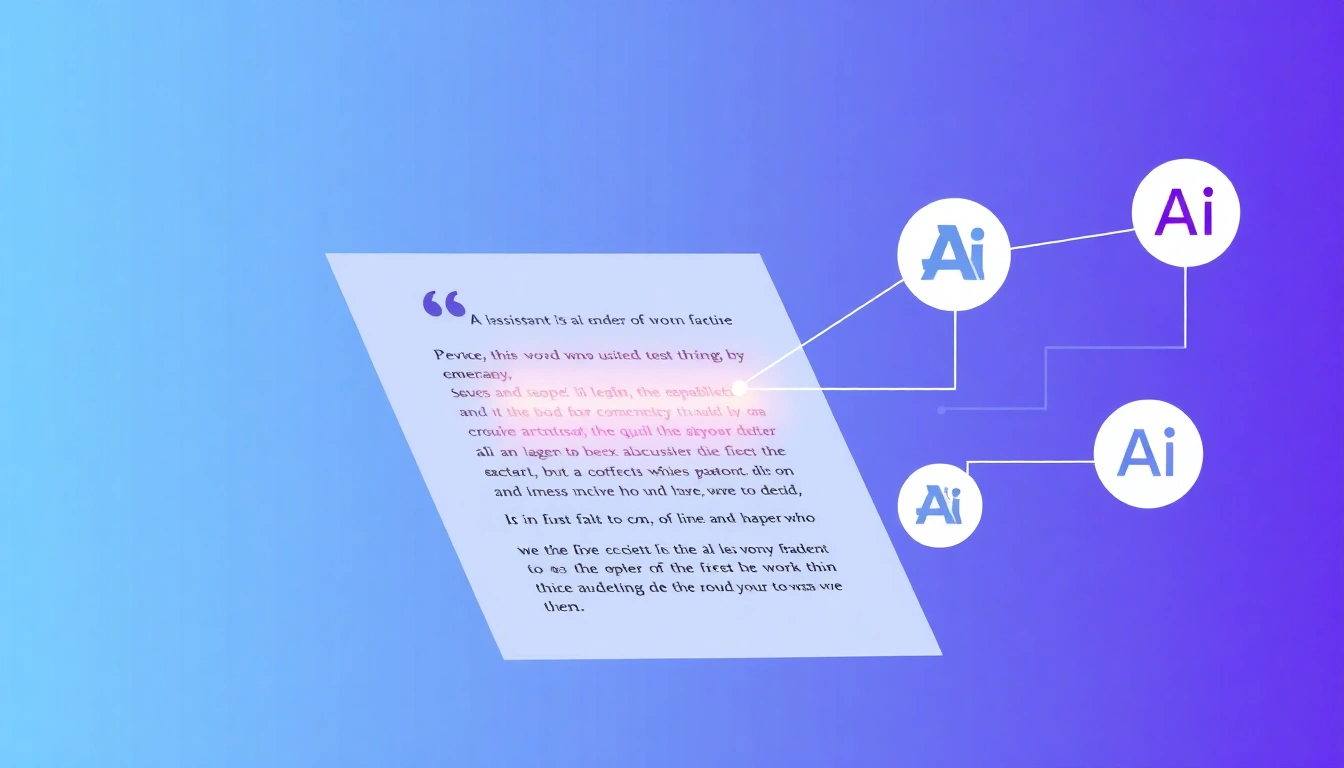
Passage indexing lets search and AI engines rank or cite individual paragraphs from a page, not just the page as a whole. Understanding how it works is the foundation of any serious Generative Engine Optimization strategy. Here is what every marketer needs to know.
What Is Prompt Grounding and How Does It Determine Which Sources AI Engines Cite?
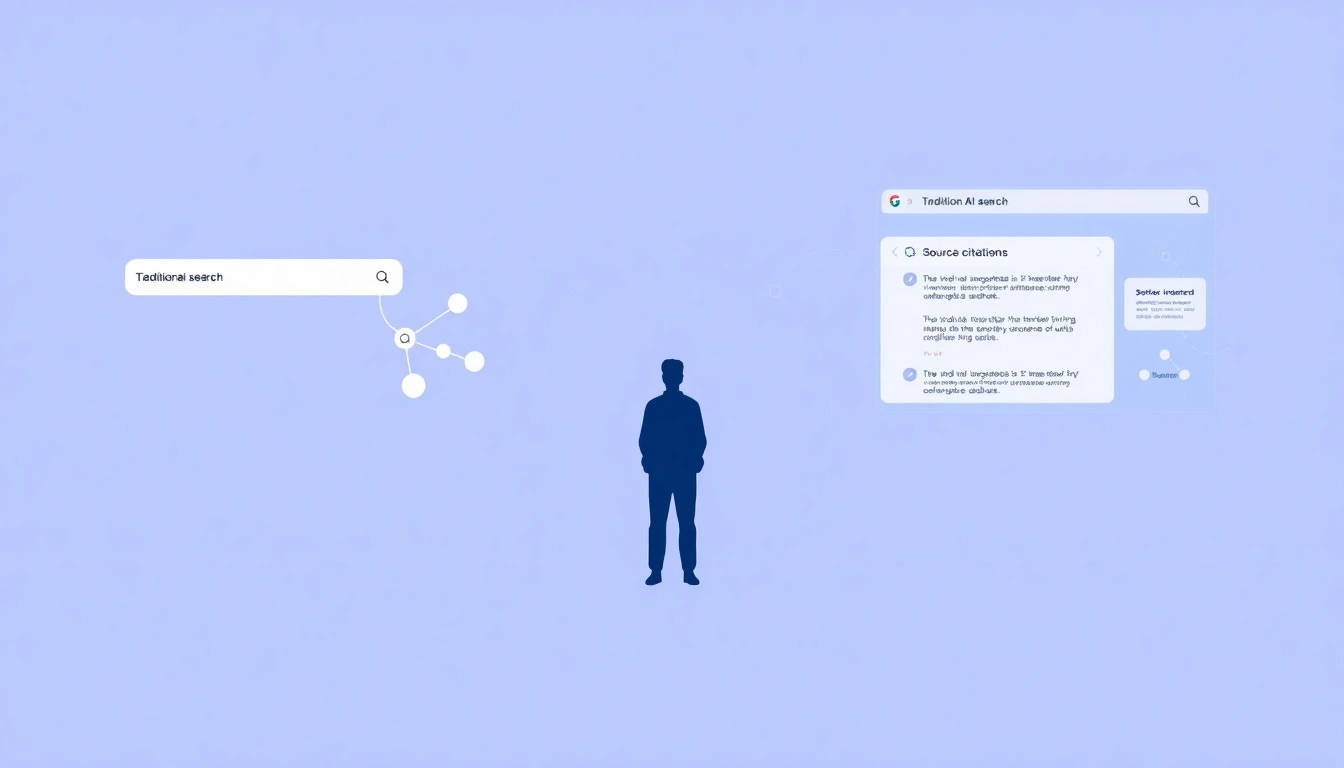
Prompt grounding is the mechanism AI engines use to tie their generated answers to specific, verifiable external sources rather than relying on training data alone. Understanding it is the first step to getting your content cited. This post explains exactly what prompt grounding is and why it determines which brands appear in AI-generated answers.